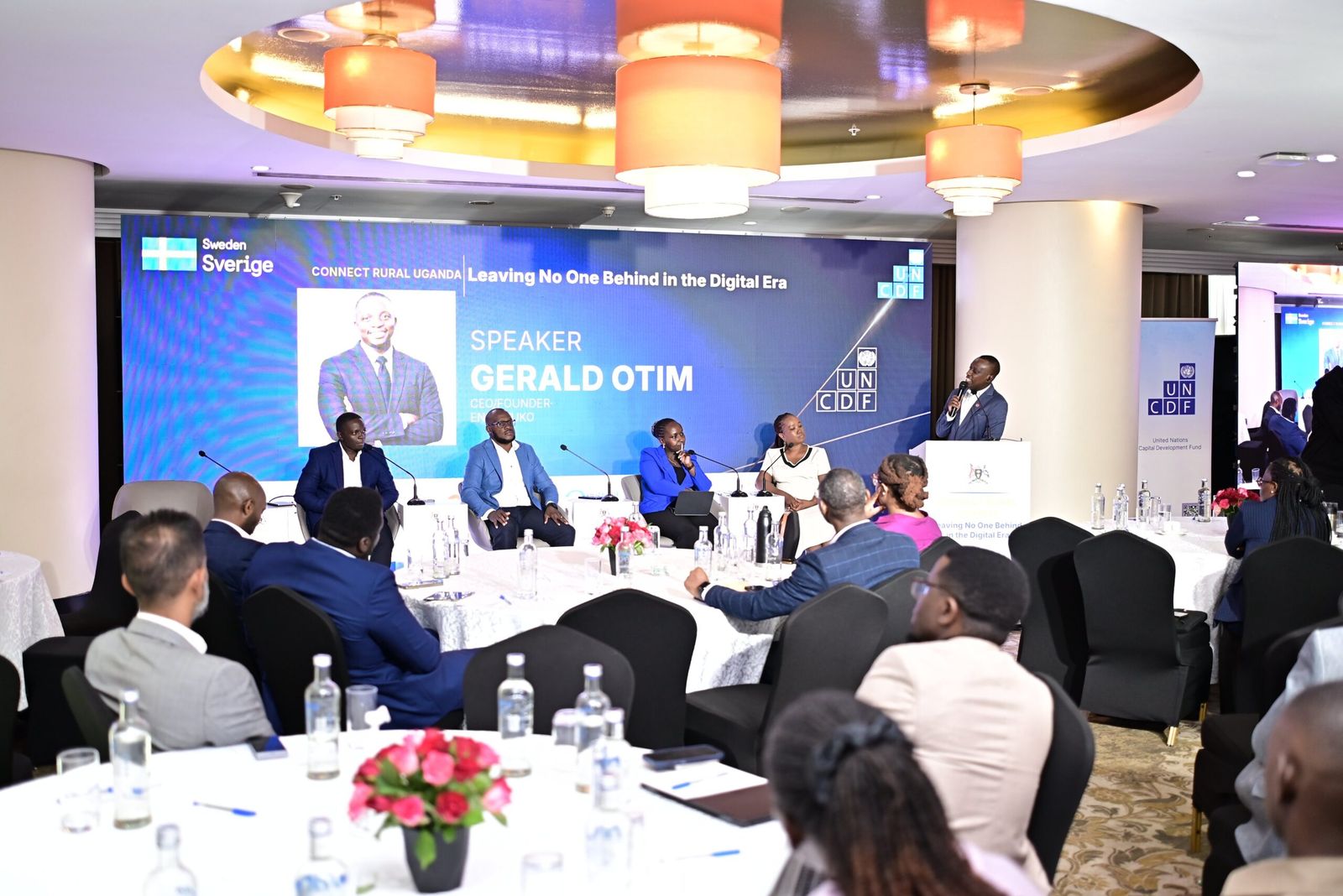


The United Nations Capital Development Fund says its Uganda digital-inclusion Leaving No One Behind (LNOB) programme registered more than 3.4 million users, but only about 29 percent were active — a gap its own close-out materials say technology alone could not close.
An August 2026 UNCDF report draft and a separate close-out presentation describe Connect Rural Uganda, a programme funded by the Swedish International Development Cooperation Agency that sought to turn access to digital services into useful financial access for rural Ugandans. The report dates the programme to 2019–2025.
The programme covered agriculture, health, education, digital services and finance, with women, young people, refugees, smallholder farmers and small businesses among its target groups. UNCDF says it recruited more than 21,000 digital agents and community enablers and piloted 26 services and business models.

Registration was the easy metric
The programme’s original target was to reach at least 1 million people, including at least 40 percent women and 60 percent youth. Its close-out presentation claims more than 3.4 million registered users, more than 1 million active users and more than 500,000 women actively participating.
Four lending models, four bottlenecks
The August report examines four lending models. Their shared technical idea is straightforward: digitise records that were previously informal, use those records to assess risk, structure repayment around the borrower’s cash cycle and connect the borrower to a lender. Guarantees can absorb an initial portion of losses, while cooperatives, savings groups and local agents handle identity, onboarding and collections.
Ensibuuko Digital Lending applied that model to village savings and loan associations, or VSLAs. It digitised savings and repayment records so lenders could assess groups remotely. The report says more than 11,000 VSLAs have been digitised, but only about 1,000 currently have access to credit, reaching roughly 25,000 people. In other words, about 10 percent of the digitised groups are served with credit.
During the project, Ensibuuko says it maintained repayment above 97 percent on loans priced at 15 percent a year. An initial Uganda Development Bank facility of UGX 500 million, listed as $136,240 in one section, later rose to about UGX 1.5 billion, or $409,000. UNCDF also reports that monthly VSLA lending rates fell from roughly 5 percent to 3.5 percent as data-based monitoring improved, though the documents do not establish that the programme alone caused the change.
Guarantees and trusted partners
UGAFODE Microfinance Limited used a different instrument: a first-loss portfolio guarantee from UNCDF. It paired the guarantee with group lending to refugees and host-community businesses around the Nakivale settlement. The report records 790 borrowers and more than $100,000 in loans under the guarantee, including 497 refugees and 293 host-community clients.
The model reduced documentation and opened a branch in Rubondo, closer to refugee clients. Yet taxpayer identification and credit-bureau rules remained difficult for groups whose registration documents could not be reliably verified. UGAFODE says Opportunity Bank and EBO SACCO later introduced comparable VSLA products in the region; the report provides no independent confirmation of that claimed replication.
Emata relied on cooperatives, agribusinesses and processors already dealing with farmers. It used automated scoring based on farm and delivery data, then issued seasonal loans typically ranging from $15 to $400, with a reported median near $200. Partners supplied the human layer for onboarding, communication and repayment.
UNCDF says 73 cooperatives used the management system and 36,000 farmers registered. The report’s narrative describes more than 3,000 borrowers receiving about 10,000 loans worth $3.2 million. A summary box in the same report separately lists more than 3,000 loans worth UGX 2.25 billion, about $0.62 million. It does not explain whether those figures cover different periods or portfolios, so they should not be combined.
What happens next
UNCDF’s proposed split is to fund onboarding and market testing with grants or performance-based support, then bring in concessional or commercial capital after a loan portfolio demonstrates performance. The report also calls for clearer identifiers and reporting rules for group borrowers, and stricter assessment of the partners that collect data and repayments.
The next named phase is FinWise, UNCDF’s 2025–2028 programme for last-mile financial health and business finance. Its concrete test will be whether it publishes comparable portfolio results and turns more of those 3.4 million registrations into sustained use without repeating the timing and partner failures documented here.


 programme registered more than 3.4 million users, but only about 29 percent were active.)