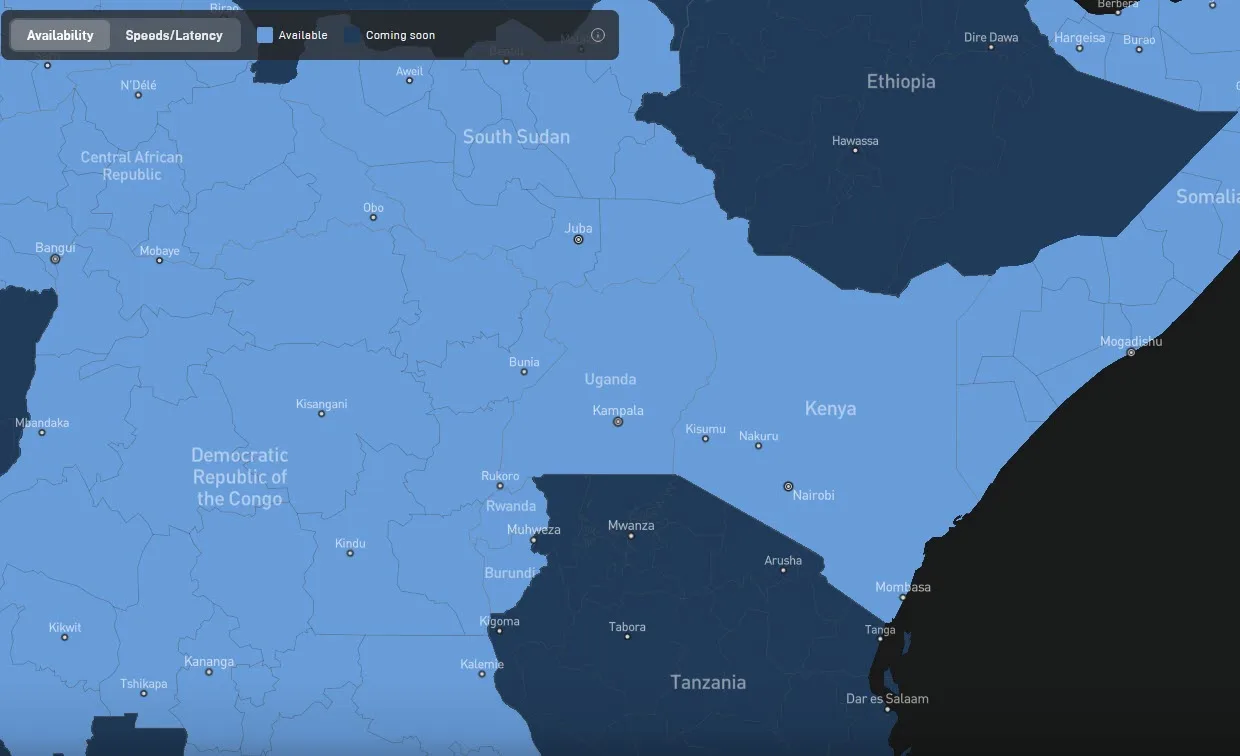


On 1 September 2026, SpaceX’s Starlink satellite internet account posted that high-speed, low-latency service is available nationwide, with a storefront on its portal and the country painted blue on the coverage map.
That sentence hides a year of fights over unlicensed kits, military customs clearance, an election-week blackout, and a licence that only arrived after President Yoweri Museveni won a seventh term.
ALSO READ: EBus Xpress Goes Bigger in Kira: Electric Buses, *165# Fares, Onboard Wi-Fi

From grey-market kits to a State House licence
Uganda did not start as a clean market. Terminals bought in Kenya, Rwanda and other licensed countries were being smuggled in and activated on the existing constellation. In December 2025, the Uganda Revenue Authority restricted imports unless they carried written clearance from the Chief of Defence Forces. On 1 January 2026, the Uganda Communications Commission told Starlink to stop unlicensed service. SpaceX complied within a day by geo-restricting the country and switching terminals off.
Opposition figure Bobi Wine publicly appealed to Elon Musk as the January 15 election approached. Two days before polling, the government ordered a nationwide public internet shutdown that lasted from 13 to 18 January. Social platforms stayed blocked longer. Starlink had already been removed from the picture, so there was no easy satellite workaround when mobile and fibre went dark. Museveni was declared the winner with 71.65 percent of the vote.
The government framed the Starlink freeze as ordinary licensing, not election control. Critics called the timing deliberate: first cut the uncensorable option, then cut the rest. In May, after the vote and the inauguration, Museveni witnessed the signing of a memorandum and a five-year operational licence at State House Entebbe. Starlink had to put a national gateway inside Uganda, open a local office with technical and legal staff, and register every activated kit. Paratus Uganda began selling enterprise service in late August. Direct residential orders opened on 1 September.
What it actually costs
The hardware is the shock. A Standard kit is listed at UGX 1,743,778. Add a regulatory fee of UGX 437,036 (a $100 levy plus VAT) and shipping of UGX 115,741 and the door-to-door total sits around UGX 2.3 million before the first month of service. The Mini kit is cheaper — about UGX 1.86 million all-in — but uses a smaller dish and lower peak speeds.
Monthly plans:
- Residential Lite (capped around 100 Mbps): UGX 203,704
- Full Residential: UGX 285,185
Local fibre undercuts that easily in cities. MTN advertises 100 Mbps fibre from about UGX 110,000 on auto-renewal; Airtel from about UGX 99,000. Starlink’s pitch is not Kampala apartments. It is mines, farms, clinics, schools and villages where fibre never arrives, and mobile data collapses in the rain. That is also why early buyers will be businesses, NGOs and higher-income households, not the median Ugandan wage.
The regulatory fee is the political residue of the election fight. SpaceX points customers to the UCC. The commission wanted devices registered, taxes collected, and a local choke point it can see. Users on X immediately called the extra Shs 437,000 a tax designed to keep the service exclusive.
What changes now
Uganda is Starlink’s 28th African market. Airtel is already testing direct-to-cell satellite links in Murchison Falls. MTN has an enterprise partnership. The licence conditions mean Kampala now has a lever it did not have in January: a local gateway and a customer register. That is the trade-off. The same architecture that lets the state tax and identify kits is the architecture that can, in theory, be used again if another shutdown is ordered.
For rural connectivity the launch is still a real upgrade. Latency on a well-placed dish beats congested 4G in many districts. For mass adoption the price is the story. Until kits drop or a subsidised public-institution programme appears, Starlink in Uganda looks like a premium backup network that survived an election by agreeing to come inside the fence.


