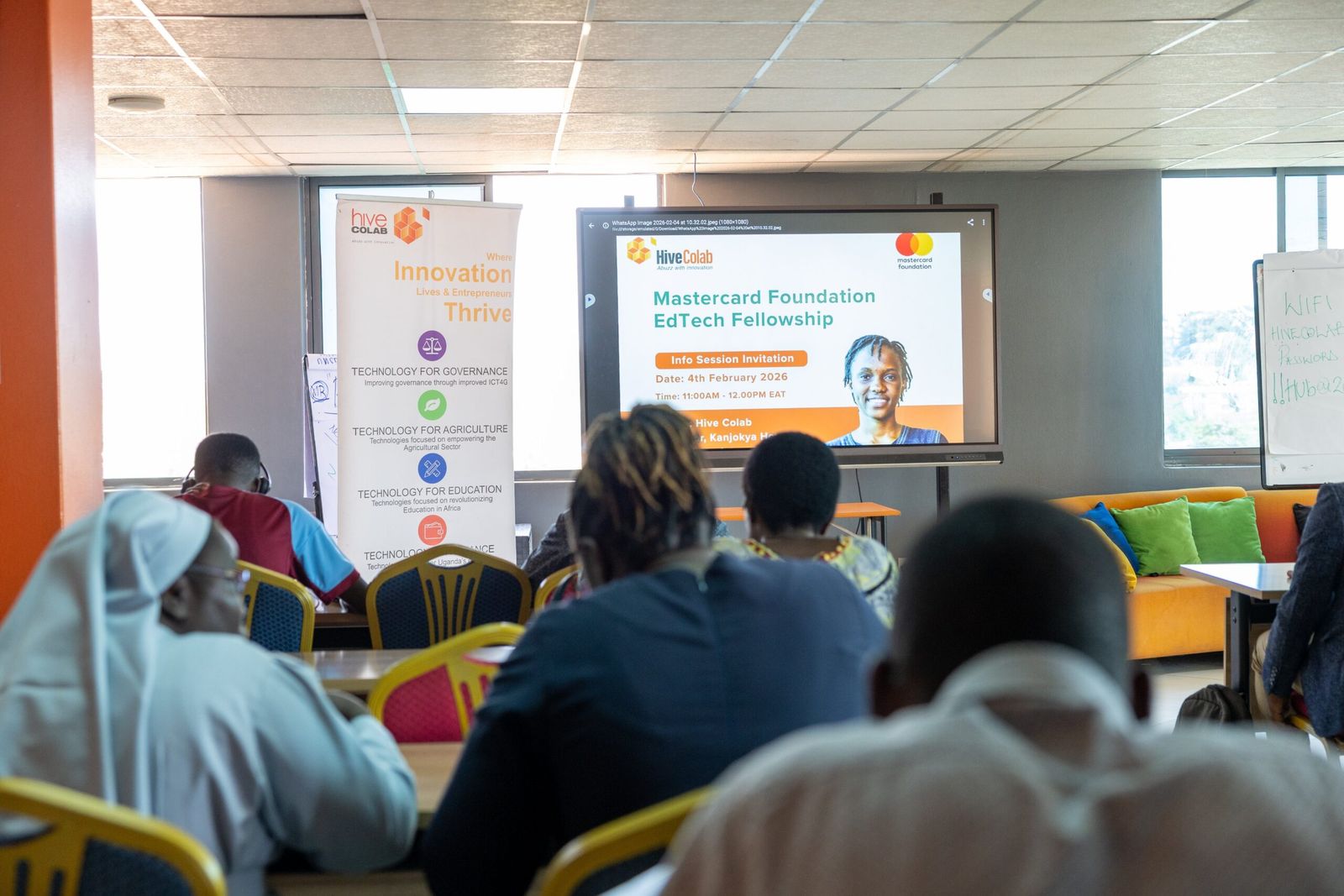


The inaugural 2026 cohort of the Mastercard Foundation EdTech Fellowship, implemented by Hive Colab, showcases a vibrant cross-section of Uganda’s most promising growth-stage EdTech ventures. These 12 solutions were selected for their demonstrated traction, innovative approaches to persistent education challenges, and potential to drive inclusive impact at scale.
Spanning digital content delivery, offline/low-tech tools, assistive technologies, vocational skilling, assessment platforms, STEM engagement, and career readiness, the cohort reflects a deliberate focus on equity; prioritising rural learners, girls, refugees, out-of-school youth, and learners with disabilities.
Here is a detailed profile of each fellow:

- Shule.tv (Digital Learning & Exam Preparation)
Shule.tv delivers curriculum-aligned video lessons for primary and secondary learners through a user-friendly mobile app, TV broadcasts, and online platforms. It targets low-income and rural communities lacking access to private tutoring or structured exam preparation support. Learners can study at their own pace, with content tailored to Uganda’s national curriculum.
- Yiya Engineering Solutions (YIYA) (Offline & Low-Tech Education Delivery)
Yiya delivers structured, skills-based education to out-of-school youth, refugees, and rural learners via radio, USSD, SMS, and AI-powered voice tools. Its experiential STEM programmes emphasise resilience and creative problem-solving, making high-quality learning possible even in zero-connectivity environments across Uganda and beyond.
- Maarifasasa Limited (Vocational Skills & Digital Workforce Development)
Maarifasasa runs a learn-to-earn model that equips underserved African youth with high-demand digital skills such as web development, data science, workflow automation, digital marketing, and virtual assistance. Combining online curricula, AI tutoring, physical learning hubs, and immediate income-generating opportunities, the platform supports youth in securing remote work and freelance gigs.
- Visual Assistance Initiative Ltd (V-SIGHT) (Assistive Technology for Learners with Visual Impairment)
V-SIGHT’s flagship innovation is the Blind Assistant Reading Kit—a solar-powered, portable, offline device that integrates audio-learning software with tactile materials. Designed for low-resource schools, it enables visually impaired learners to access printed educational content independently.
- Wokober Education Foundation Ltd (Hands-On Science & Technology Learning)
Wokober brings weekly project-based science and technology lessons to under-resourced schools using low-cost kits made from recycled and local materials. Its offline-first AI teacher assistant, Wokoverse, supports facilitators with lesson planning, progress tracking, and adaptive instruction.
- Tambula Edtech Concepts (Classroom Assessment & Game-Based Learning)
Tambula provides teachers in large, resource-constrained classrooms with a game-based quiz and assessment platform delivered via purpose-built offline handheld devices—no smartphones required. The system enables real-time formative assessment and immediate feedback in low-tech environments.
- AniScholar Career Hub (Youth Employment Readiness & Career Development)
AniScholar bridges the education-to-employment gap by connecting students and recent graduates to expert coaching, career content, bootcamps, and structured internship placements. Its digital platform links users with employer and university partners, emphasising both technical and soft skills demanded by the labour market.
- Mindset Coders (Robot Box) (Robotics & Technology Careers for Young Learners)
Mindset Coders provides hands-on robotics, coding, and AI education through clubs, camps, and competitions, with a strong focus on girls and rural schools. Its locally produced RobotBox—an AI-enabled, offline robotics kit—gives learners early, practical exposure to technology and problem-solving skills.
- Hi-shule (Interactive STEM Content & Teacher Support)
Hi-shule creates offline-first animated STEM lessons, simulations, and a gamified AI quiz platform tailored for schools lacking laboratories, electricity, or trained science teachers. Its visually engaging content makes abstract concepts accessible, with emphasis on girls and rural learners.
- Yaaka Digital Network (Mobile Learning & Curriculum Content)
Yaaka offers curriculum-aligned lessons, revision materials, and gamified content via a mobile-first, low-data platform accessible on basic smartphones. It supports both in-school and out-of-school learners, enabling interactive classes even in areas with limited internet.
- STEMGenius (Interactive STEM Learning & Robotics)
STEMGenius delivers an interactive platform combining simulations, gamified lessons, and hands-on robotics to make mathematics and science visual, practical, and engaging for learners aged 5-18.
- Mulmet / KAT-D App (MULMET CO. LTD) (Early Childhood Learning & Digital Play)
Mulmet’s KAT-D platform provides early primary learners with interactive games, quizzes, flashcards, word puzzles, badges, and competency-based assessments fully aligned to Uganda’s Competency-Based Curriculum. The app transforms traditional study materials into fun, dynamic experiences.
This inaugural cohort represents a collective push toward an EdTech ecosystem that is locally rooted, inclusive by design, and impact-driven. Through the Mastercard Foundation EdTech Fellowship, these 12 ventures will receive the structured support needed to refine their models, strengthen evidence of learning impact, and scale sustainably.


