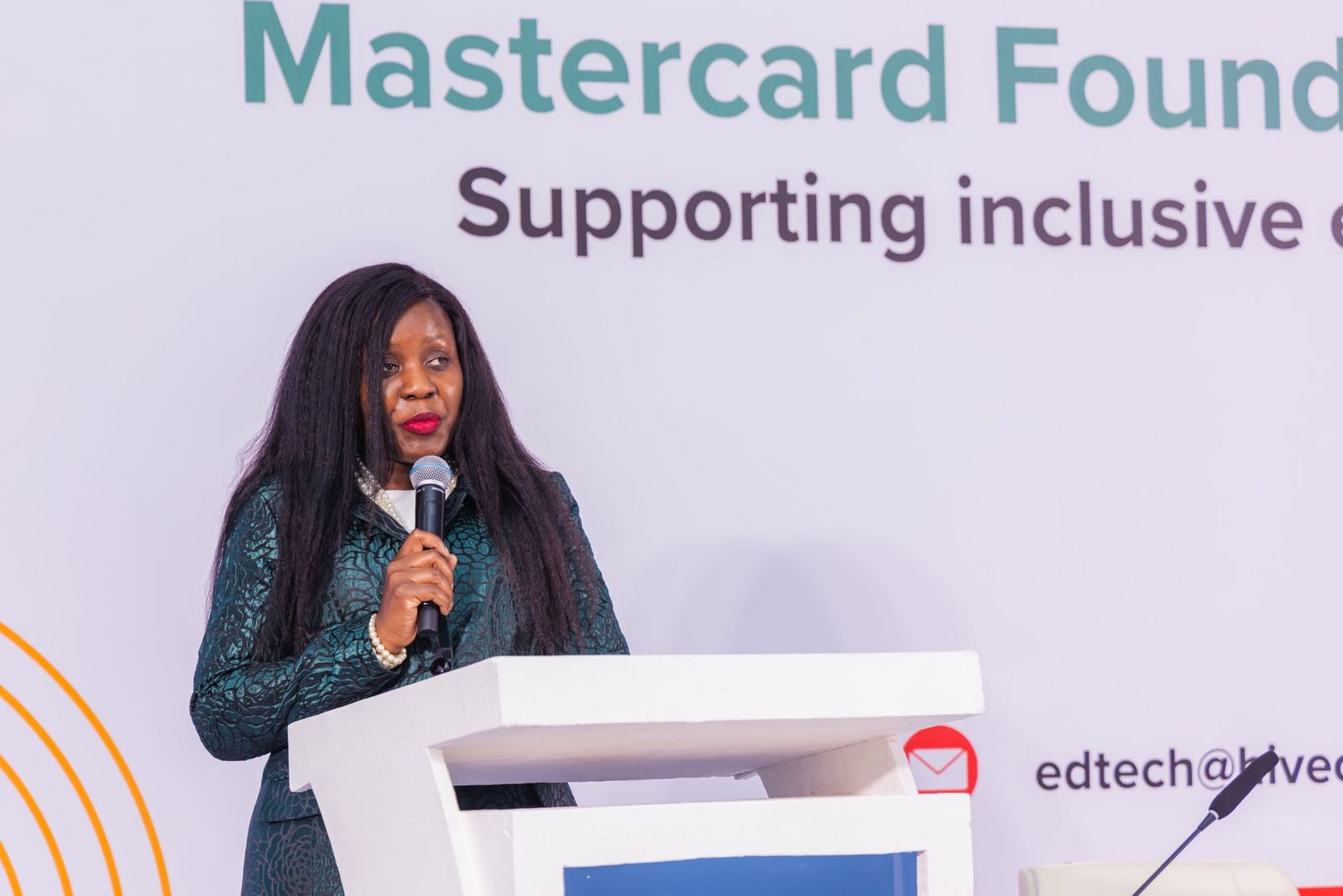


Hive Colab officially launched the Mastercard Foundation EdTech Fellowship in Uganda at a high-profile event held last week. The gathering brought together government officials, academics, innovation ecosystem players, development partners, and private sector leaders under the theme “Supporting inclusive education innovation in Uganda.”
This marked the kick-off of a major five-year partnership aimed at accelerating 36 locally led, growth-stage EdTech ventures — 12 per year across three cohorts — to address critical gaps in access, quality, and relevance of education across the country.
The Mastercard Foundation EdTech Fellowship is a selective entrepreneurship acceleration programme designed specifically for promising African-led EdTech companies. Implemented in partnership with innovation hubs and accelerators across the continent, it equips selected ventures with tailored business and financial support, deep insights into the science of learning, mentorship, technical assistance, networks, and structured opportunities to refine solutions for scale, sustainability, and measurable impact.

In Uganda, Hive Colab serves as the lead implementer, focusing on ventures that operate in or have a strong focus on the Ugandan context and are ready to move beyond pilots into responsible scaling.
Barbara Mutabazi, Executive Director of Hive Colab, underscored the programme’s systemic ambition during her remarks: “Uganda’s EdTech ecosystem is rich with innovation and talent. The opportunity now is to translate this promise into scalable and sustainable impact. This requires more than supporting individual ventures. It calls for coordinated support, continuous and evidence-based learning, and strong partnerships across the ecosystem. Through the Mastercard Foundation EdTech Fellowship, we are intentionally bringing these elements together to strengthen the system as a whole, enabling locally led solutions to grow, scale, and deliver meaningful impact where it matters most—improving education outcomes across Uganda.”
Wariko Waita, Director of the Centre for Innovative Teaching and Learning at the Mastercard Foundation, added: “Innovation alone does not and cannot change systems. Adoption does. And that is why this moment matters. The Mastercard Foundation EdTech Fellowship is not only about accelerating solutions, but also about positioning locally developed, locally owned solutions for scale and impact. It equips EdTech entrepreneurs to build sustainably, aligning innovations with national education priorities, supporting educators to integrate technology effectively, and ensuring that no learner is left behind. To achieve this, we need the collective effort of not just the government, but also entrepreneurs, investors, development partners, teachers, learners and parents to realize results.”
Hive Colab presented key findings from a comprehensive baseline assessment of Uganda’s EdTech ecosystem during the launch. The study revealed explosive growth, with 67% of surveyed solutions having launched between 2023 and 2026, signalling a rapidly maturing sector. However, it also highlighted persistent structural challenges: severe undercapitalisation, fragmentation, and difficulties scaling beyond pilots.
These issues are particularly urgent given Uganda’s demographics — approximately 50.5% of the population is under 18 — and socioeconomic realities, including youth unemployment rates exceeding 17% for ages 18-30, internet access in learning institutions below 30%, and only 35% of children completing the full seven-year primary education cycle. The selected fellows are directly tackling these barriers through solutions spanning digital learning access, teacher support, assessment tools, skills development, learner engagement, offline/low-tech delivery, assistive technologies, and career readiness.
The 2026 cohort comprises 12 diverse Ugandan EdTech ventures, each demonstrating traction and alignment with national priorities. Fellows will benefit from customised acceleration support, including mentorship from industry experts, access to investor networks, evidence-based learning modules on pedagogy and impact measurement, and opportunities for ecosystem collaboration.
The launch featured remarks from representatives of the Ministry of Education and Sports, alongside panel discussions on innovation’s role in national development and the power of cross-sector partnerships. Panellists explored how EdTech can complement government policy frameworks, enhance teacher capacity, and reach marginalised groups including rural learners, refugees, girls, and those with disabilities. The day concluded with a networking reception that fostered new collaborations among stakeholders committed to education transformation.
Over the five-year programme, Hive Colab will not only support individual ventures but also produce and disseminate learning products — such as case studies, policy briefs, and ecosystem reports — to inform broader investment, policy, and coordination efforts in Uganda’s EdTech space. This positions the Fellowship as both a venture accelerator and a catalyst for systemic change.
With Uganda’s education system facing immense pressure to deliver quality learning at scale amid rapid population growth and digital divides, the Mastercard Foundation EdTech Fellowship arrives as a timely and strategic intervention. By backing homegrown innovation that is designed for local realities — low connectivity, resource-constrained classrooms, and diverse learner needs — the programme promises to deliver not just technology, but transformative, inclusive education outcomes for generations to come.


