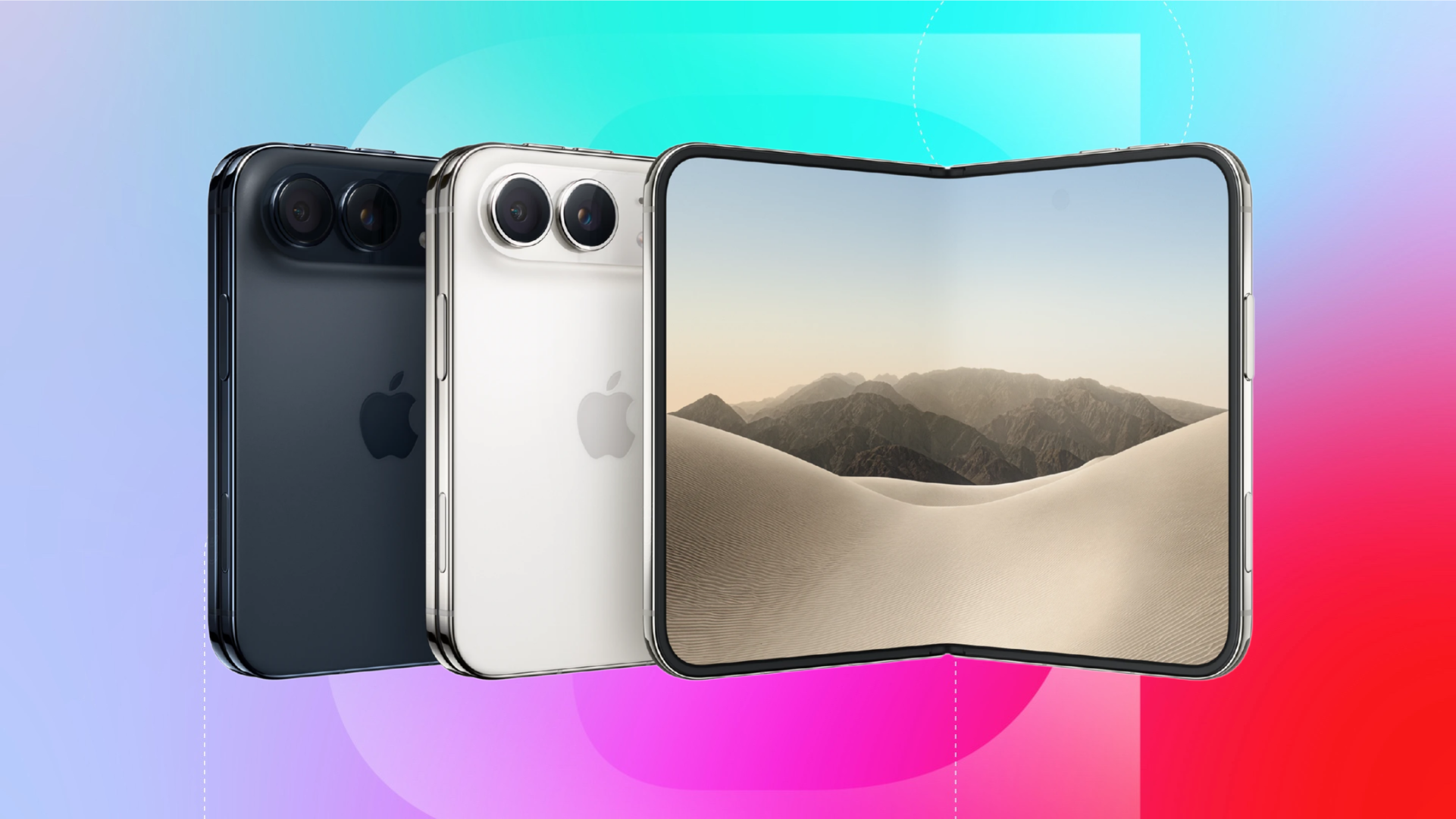


For nearly two decades, the iPhone has followed a familiar formula: a single glass-and-metal slab that has gradually become thinner, faster and more capable with each generation.
But the smartphone industry is entering a different era.
Foldable devices have moved from being experimental concepts to becoming a growing category, with manufacturers exploring ways to give users larger screens without forcing them to carry larger devices.

Now, Apple is entering that conversation.
The company’s first foldable iPhone — referred to as the iPhone Duo — represents one of the biggest design shifts in the iPhone’s history. Rather than simply making the screen larger, Apple is rethinking the relationship between portability and display space.
The result is a passport-style book foldable device designed to combine the convenience of a traditional smartphone with the expanded workspace of a tablet.
A familiar iPhone experience, with a larger canvas
At the centre of the iPhone Duo experience is its dual-display design.
The device features a 5.4-inch outer display for everyday tasks such as calls, messaging and quick interactions, while unfolding the phone reveals a 7.6-inch inner display — the largest screen ever introduced on an iPhone.
According to Apple, the inner display offers around 50% more screen area than the iPhone 18 Pro Max, creating more room for productivity, entertainment, gaming and creative work.
The two displays maintain the same aspect ratio, allowing users to move between the folded and unfolded experiences more naturally.
This is one of the biggest challenges foldable phones have attempted to solve: how to make two different screen sizes feel like one continuous experience rather than separate devices joined together.
Apple’s approach appears focused on familiarity. The iPhone Duo is still designed to feel like an iPhone — only one that expands when users need more space.
Engineering a thinner foldable
Foldable phones have always faced a difficult balance between innovation and practicality.
A device must be thin enough to carry comfortably, strong enough to withstand daily use and advanced enough to justify its premium positioning.
Apple’s response is a titanium frame construction combined with Ceramic Shield protection and IP68 water and dust resistance.
The inner display also features a nano-texture surface designed to reduce reflections and make the fold area less visually distracting.
The crease has been one of the most noticeable challenges in foldable smartphone design since the category began. While manufacturers have improved their approaches over time, removing or reducing the visual and physical impact of the fold remains a key engineering challenge.
Apple’s entry into the category will likely draw attention not only because of the product itself, but because of how the company approaches these long-standing issues.
Apple has historically entered product categories after others have experimented, often focusing on refining the experience rather than being first to market.
The iPhone Duo follows a similar pattern.
Performance built around a larger screen
Powering the device is Apple’s A20 Pro chip, designed to support the demands of a larger display and more intensive workflows.
The iPhone Duo introduces a dual-battery system, delivering up to 31 hours of video playback when using the inner display and up to 44 hours when using the outer screen.
Battery life has always been one of the most important considerations for mobile users, especially as devices become more capable. Larger displays, AI features and advanced cameras all require more power, making efficiency increasingly important.
Photography remains a major part of the iPhone experience, and the iPhone Duo continues that focus with a camera system built around a 48MP Fusion main camera and a 48MP ultrawide camera.
Beyond traditional photography improvements, Apple is introducing new features designed specifically around the foldable form factor.
Smart Take uses the expanded display experience to offer more intelligent camera interactions.
Duo Preview allows subjects and photographers to see different views during capture, while Kid Cue is designed to improve moments where parents are taking photos or videos of children.
The phone also introduces tabletop and tripod-style posing capabilities, allowing users to position the device more creatively for hands-free photography and video.
These features highlight an important point about foldables: the value is not only having a bigger screen. It is finding new ways for the device to interact with everyday situations.
A device that sits between phone and tablet
Apple is also extending the iPhone Duo’s capabilities beyond traditional smartphone use.
The company has confirmed support for Apple Pencil functionality later this year, pushing the device closer to the territory traditionally occupied by tablets.
For professionals, creators and students, this could make the foldable iPhone more than just a communication device.
A larger display can make reading documents, reviewing designs, editing content or taking notes more comfortable.
However, the challenge will be convincing consumers that a foldable iPhone can replace multiple devices rather than simply becoming an expensive alternative.
The category is still developing, and many users will continue to weigh the benefits of a larger screen against questions around durability, repair costs and long-term value.
A premium product for a changing market
The iPhone Duo will launch in two colours: Star White and Night Sky.
Pricing begins at $1,999 for the 256GB model, with storage options extending up to 2TB.
Pre-orders begin on October 16, with availability starting October 23.
The price immediately positions the device firmly in the premium segment. It is not designed to replace the standard smartphone market, but rather to introduce a new category for users who want the latest combination of portability and screen space.
For markets such as Uganda and other emerging economies, the arrival of devices like the iPhone Duo also raises broader questions about the future of personal technology.
As smartphones become more powerful, they are increasingly taking on roles once reserved for laptops and tablets. The demand for devices that can support work, learning, entertainment and creativity continues to grow.
The question is whether foldable technology will eventually become mainstream or remain a premium niche.
The answer will depend on more than innovation alone.
Affordability, durability, repairability and real-world usefulness will determine whether foldables become the next major evolution of smartphones or simply another chapter in mobile experimentation.
The iPhone Duo represents Apple’s answer to one of the industry’s biggest questions: what happens when a smartphone no longer has to remain the same size?
For now, it offers a glimpse of a future where the phone in your pocket can transform into something much larger when you need it — without asking users to carry two separate devices.


