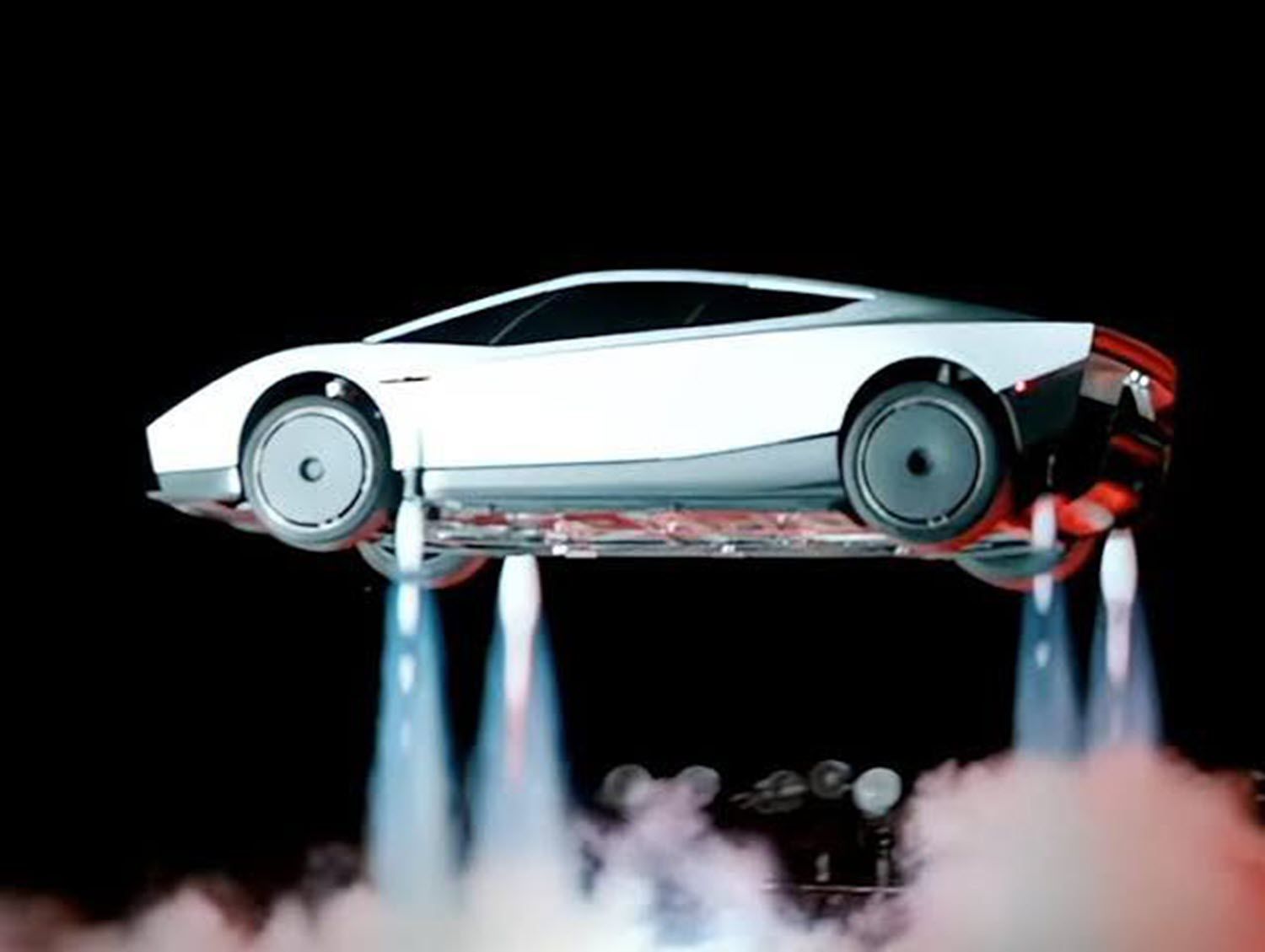


Now that the hype and the dust have settled, early this month, Elon Musk delivered the spectacle many had been waiting for since the original Tesla Roadster teases years earlier: a car that drove up a steep multi-story ramp, hung upside down, launched into the air, executed a midair kickflip over a lineup of Tesla vehicles (including a Semi), and landed under its own power.
ALSO READ: WhatsApp introduces Guest Calling, allowing anyone to join calls without an account
The footage is real. Tesla livestreamed the event, attendees recorded their own clips, and fact-checkers found no evidence of AI generation or digital fakery in the core stunts. What you saw was a prototype performing controlled aerial maneuvers with hardware borrowed from SpaceX.

How the “flying” actually works
The star of the show was the single-seat “Rocket” configuration. It packs roughly 600 liters of compressed air feeding 10 directional cold-gas thruster nozzles, plus a powerful suction-fan system (inspired by SpaceX and racing downforce tech) that can generate significant grip—even enough for upside-down driving on a ramp.
These thrusters produce short, powerful bursts of thrust from pressurized air (no combustion, no rocket fuel). They enable the car to launch, stabilize midair, roll or flip, and soften landings. Combined with the fans for road adhesion, the setup turns the Roadster into something closer to a high-performance stunt vehicle or short-hop hopper than a conventional car or aircraft.
Claims from the event included 0–60 mph in under a second (Tesla clocked about 0.81 seconds on stage) and top speeds well above 230 mph in certain configurations. Independent verification is still pending, and the extreme acceleration would be punishing for occupants.
Real hardware, limited reality
The demonstration was jaw-dropping as pure engineering theater. Equipping an electric supercar with this thruster and fan package is impressive, and the controlled flips and landings show genuine technical capability.
It is not, however, a practical flying car you can buy and drive (or land) on public roads. Tesla has indicated the Rocket version will be invite-only. It sacrifices the passenger seat for the high-pressure tanks and prioritizes short thruster bursts over everyday usability. The company has acknowledged it is not approved for public road use. Regulatory hurdles for anything that combines road-going status with thruster-assisted flight would be enormous.
Broader commercial details were thin. The Roadster’s previously discussed range target has been scaled back (reports put it around 300 miles in some configurations), pricing for the more extreme versions was not clearly locked in, and Musk pushed the production timeline to 2028—more than a decade after early reservation deposits were taken. He has also described the Roadster itself as a relatively small project compared with mass-market vehicles.
There are milder Roadster variants intended for more conventional (if still extreme) performance, but the full thruster-equipped Rocket is the one that performed the aerial stunts.
Spectacle versus product
Competitors already ship (or have shipped) extremely fast electric hypercars with wild acceleration, high top speeds, and even limited jumping or extreme-downforce tricks. What Tesla uniquely delivered here was the combination of SpaceX-derived thrusters, the theatrical presentation, and the cultural moment of “the flying car is real.”
As a 30-minute demonstration of engineering ambition and brand showmanship, it succeeded. As a near-term product you can expect to park in a driveway or fly to work, it does not. The technology is real; the practical flying-car future it evokes remains aspirational, heavily constrained, and years away at best.
The night proved Tesla and SpaceX can make a car perform gravity-defying stunts on demand. Whether that translates into something more than an exclusive, limited-use halo machine is a question for the rest of the decade.


