

WhatsApp has long been the default place where families plan dinners, friends organize weekends, and colleagues handle the little details that never quite fit into email. The company rolled out a focused set of improvements aimed squarely at making those group conversations work better in everyday life.
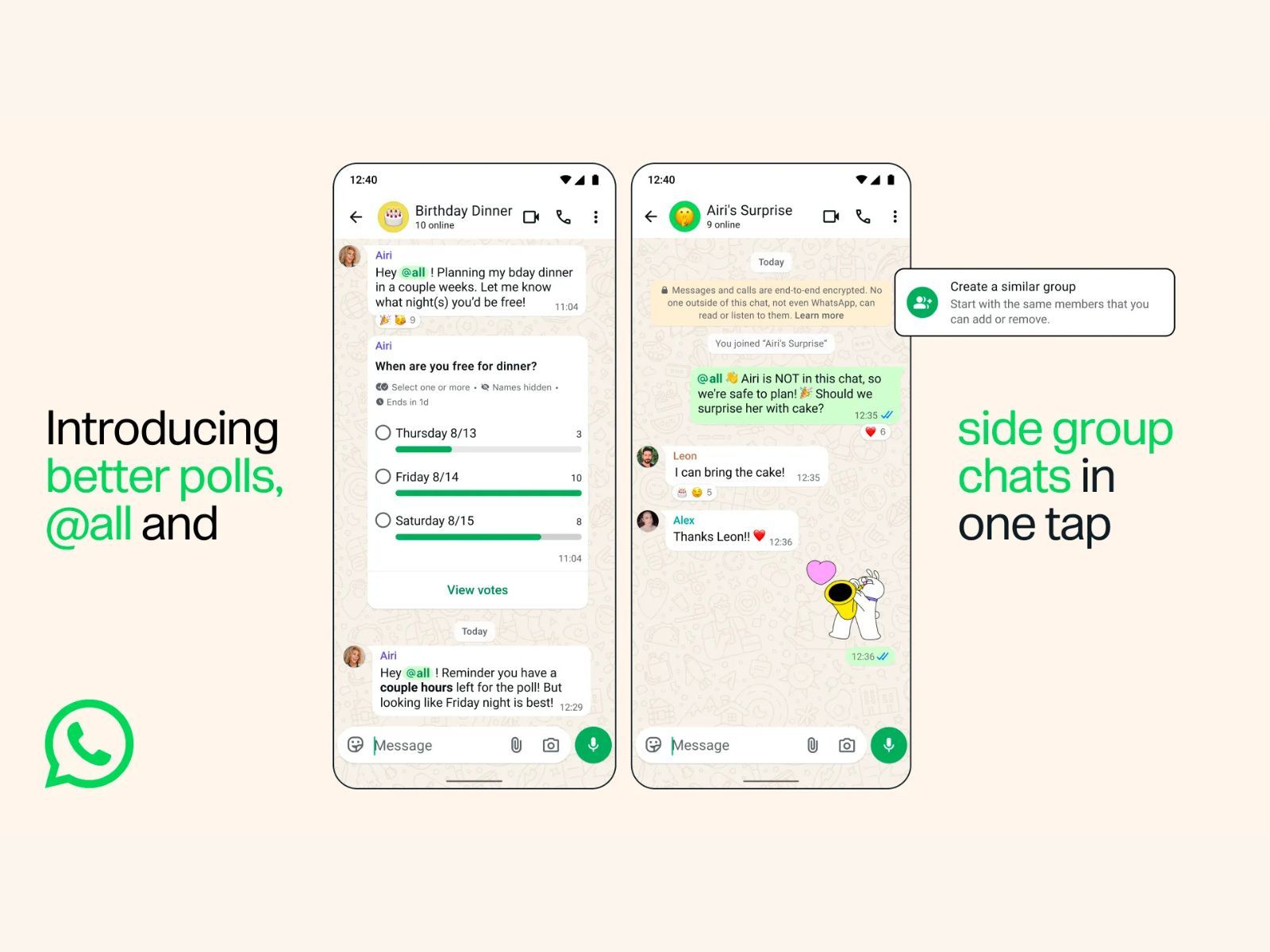
The updates center on three practical changes: more flexible and private polls, a simple way to grab everyone’s attention with @all, and a quicker method to spin off new chats from an existing group.
Together they address common frustrations that have been part of group messaging for years.

Smarter polls
Start with the polls, which many groups already use to settle everything from dinner spots to meeting times. Until now, once a poll went out, it was largely set in stone.
You could see the results update in real time, but if someone spotted a typo in the question or realized the options needed a quick tweak, there was little recourse beyond creating a new one and hoping people would switch. That changes today.
Poll creators can now edit the question and options for up to 15 minutes after posting. It’s a small window, but it covers the exact moment when mistakes usually surface—right after people start voting and pointing things out.
More useful still is the ability to set an end time. You can lock voting so that results freeze at a chosen deadline. No more open-ended polls that drag on for days while half the group has already moved on. Decide you need answers by Friday at 6 p.m., set the timer, and the poll closes automatically.
The third poll change addresses a quieter but real social barrier: people sometimes hesitate to vote when everyone can see their name next to an option. Now you can hide voter names. The group still sees the tally, but individual choices stay private. That should make it easier for people to weigh in honestly on sensitive or preference-based questions without feeling exposed.
These poll refinements matter because group decisions rarely happen in isolation. A family trying to pick a weekend getaway, a sports team voting on practice times, or a neighborhood group choosing a cleanup date all benefit from cleaner, more decisive tools. The changes don’t reinvent the feature; they simply remove the friction that used to turn a quick vote into a prolonged back-and-forth.
Instant alerts
The second major addition is the @all mention. In busy groups it has always been tedious to make sure an urgent message reaches everyone. Tagging people one by one is slow, and simply posting into a muted or noisy chat risks the note getting buried. Typing @all now notifies the entire group at once. WhatsApp gives clear examples of when this helps: school or office closures, event deadlines, or last-minute plan changes.
The notification even cuts through muted chats so important information doesn’t get lost, though users keep control—they can mute @all specifically in their notification settings if they prefer.
There is a sensible limit. In groups larger than 32 people, only admins can use @all. That prevents notification spam in big communities or work groups while still giving smaller, tighter circles full flexibility.
The feature feels like a natural extension of the existing mention system rather than a dramatic new power. Used thoughtfully, it should reduce the number of “did you see my message?” follow-ups that clutter so many chats.
Effortless side conversations
Finally, WhatsApp has made it easier to create a new group chat from an existing one. Instead of opening a fresh chat and adding members individually, you can now pull people from the current group with a couple of taps.
The practical uses are obvious.
Planning a surprise party and don’t want the whole family group to see the details? Spin off a smaller chat with just the organizers. Coordinating logistics for an event while the main conversation continues about other topics? Create a focused side group without the administrative hassle. It’s a small quality-of-life improvement that recognizes how conversations naturally branch.
These three updates arrive after earlier group-focused work this year, including message history for new members and member tags. WhatsApp is clearly treating group chats as a living product that needs steady refinement rather than occasional overhauls.
The approach is incremental and grounded in real user behavior: people want faster decisions, clearer signals when something matters, and the ability to keep discussions organized without constant manual effort.
The features are rolling out now. As with most WhatsApp changes, availability may vary slightly by region and device at first, but the core experience is the same across platforms. For anyone who lives in multiple group chats, and that covers most of the app’s users, these adjustments should make the daily rhythm of messaging feel a little less chaotic and a little more intentional.


