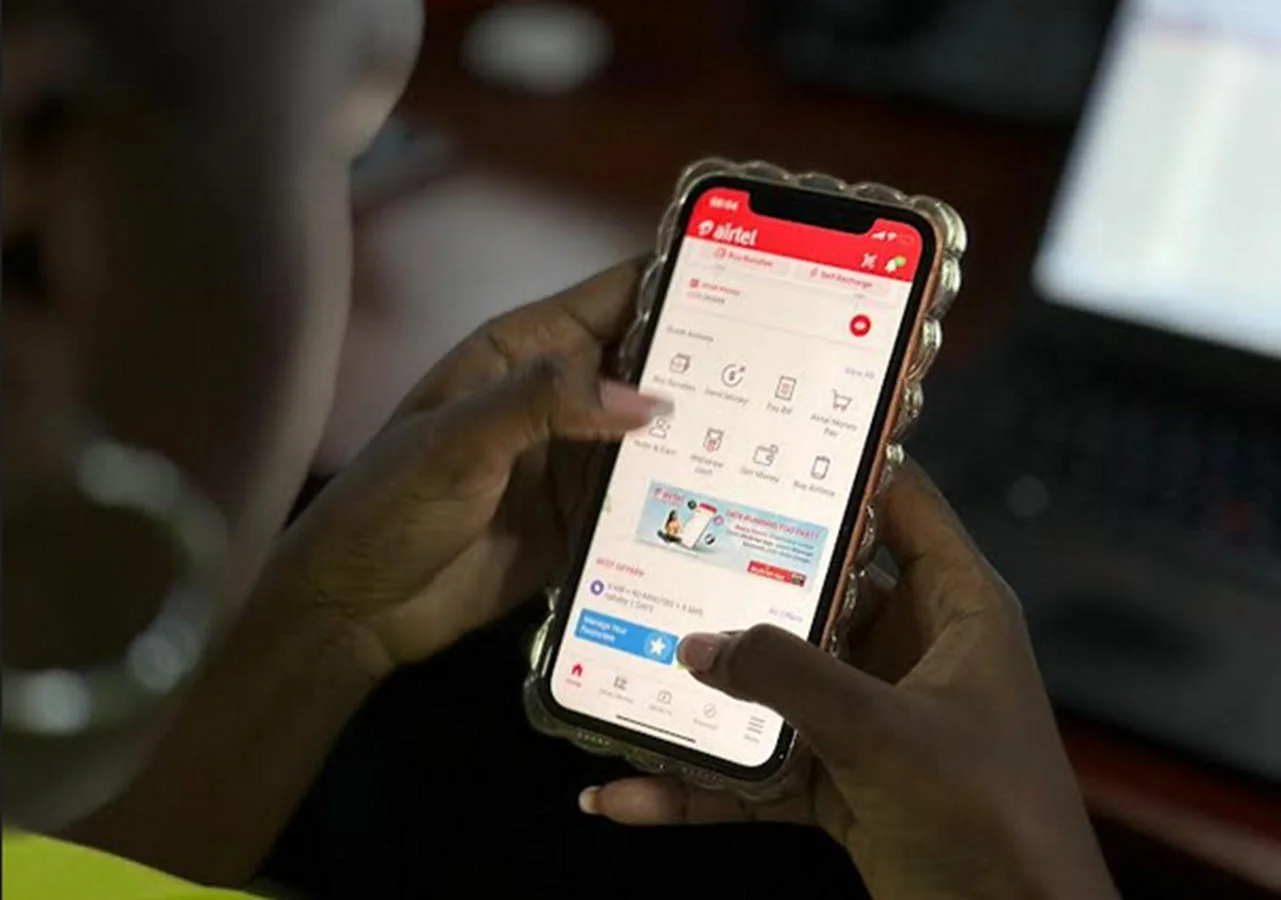


Airtel Africa just released its results for the first half of its 2027 financial year (the six months to the end of September 2026). The headline is simple: the company is growing fast because more people are using data and mobile money, and it is pouring money into the network to keep up.
ALSO READ: Data Power Struggle Explodes: Stats Bureau Tells Public to Ignore ICT Ministry’s AI-Ready Plan
For Ugandans, this matters because Uganda sits inside Airtel’s East Africa region (alongside Kenya, Tanzania, Rwanda, Malawi and Zambia). When East Africa does well, it usually means better coverage, stronger 4G, more mobile money agents, and gradual improvements in the service you use every day.
More People, More Data, More Mobile Money
Airtel now has 193.9 million customers across its 14 African countries, up 11.6% from a year earlier. Of those:
- 89.9 million are data users (up 15%)
- 60.9 million use Airtel Money (up a strong 22.4%)
Smartphone ownership is rising fast. Across the whole group it reached 51.6%. In East Africa it is still a bit lower at 48.6%, but it is climbing steadily. Once people get a smartphone, they use a lot more data. Average smartphone data use jumped to 13.3 GB per month group-wide (from 10.1 GB). In East Africa it is already 12.2 GB per month.
In plain terms: more Ugandans are buying smartphones, watching videos, using social media, and doing business online. Airtel is seeing that demand clearly and is responding by building more network capacity.
East Africa’s Solid Performance (Includes Uganda)
Here is how the East Africa mobile services business performed:
| Metric | H1’27 | Change (constant currency) |
|---|---|---|
| Revenue | $1,258m | +15.4% |
| Customers | 88.8 million | +8.0% |
| Data customers | 39.5 million | +15.2% |
| Average revenue per user | $2.4 | +6.1% |
| EBITDA margin | 50.5% | Up sharply |
Mobile money is even stronger in the region. East Africa mobile money revenue hit $615 million, growing more than 20% in constant currency terms, with 44.1 million mobile money customers.
This is the tech story: Airtel is not just selling airtime. It is becoming the digital wallet and payment system for millions of people who previously had limited or no access to banks.
Heavy Investment in the Network
Airtel spent $657 million on capital expenditure in the half-year – more than double the previous year. It added roughly 4,200 new sites and now has 99.2% of its network sites running 4G. 5G is live in seven markets and expanding.
The company is also growing fibre (over 83,000 km total), building data centres (through its Nxtra division), and has a partnership with Starlink to reach more rural areas. It is also using AI to improve customer service, detect fraud, and design better products.
For ordinary users this translates into:
- Better coverage in more places
- Higher capacity so the network does not slow down as much when everyone is online
- Faster roll-out of home broadband and enterprise services
- A stronger mobile money ecosystem with more agents, more merchants, and more digital features
The Financial Picture in Simple Terms
The company made $3.8 billion in revenue (+28% in reported numbers, +21% when currency effects are removed). Profit after tax rose to $452 million. Margins stayed very high (around 50%), even with rising fuel costs, because the business is growing and becoming more efficient.
Importantly, leverage (debt relative to earnings) improved, and the company is still paying a higher dividend while also buying back shares. In short: it is profitable enough to keep investing heavily in technology without over-stretching itself.
What This Means for Uganda
Uganda benefits from the same trends driving the whole East Africa region:
- Rising smartphone use and data consumption
- Strong mobile money growth that continues to pull more people into the formal digital economy
- Ongoing network investment that should gradually improve coverage and speeds
- A company that is deliberately accelerating capital spending rather than holding back
The big remaining opportunity is still huge: unique mobile penetration across Airtel’s markets is still under 50%, and formal banking penetration is under 40%. That means there is plenty of room for more people to get connected and to start using digital financial services.
Airtel’s message is clear – it is investing now so it can capture that growth later. For users in Uganda, that investment is what eventually shows up as better signal, more reliable data, easier mobile money transfers, and new digital services.


.)