

For much of the past decade, one number dominated African fintech conversations: growth. How many users? How many transactions? How many downloads? How many countries? And, perhaps most importantly, how many millions or billions was the startup worth? Profitability often came later. Sometimes much later.
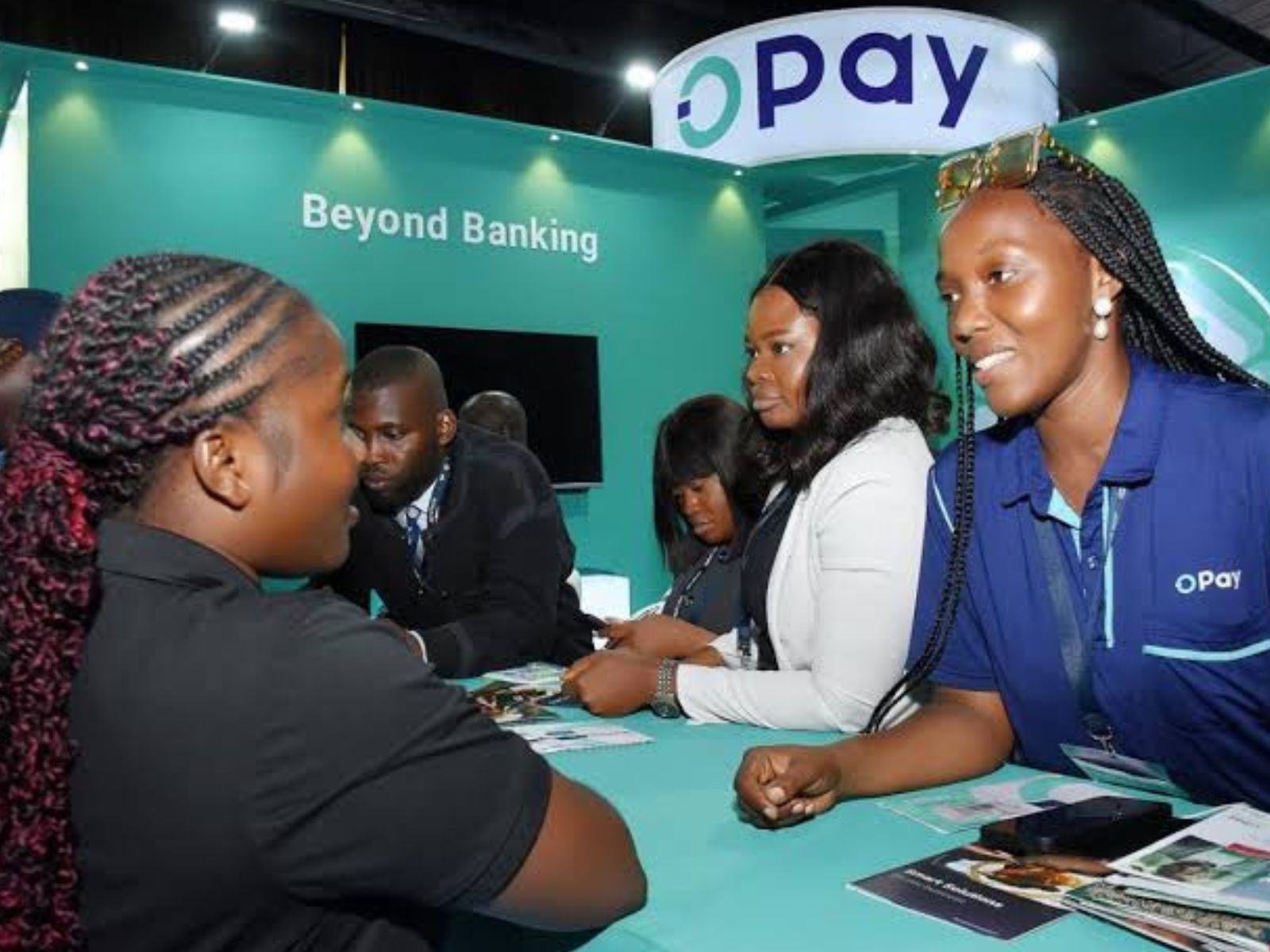
OPay’s latest numbers suggest that story may be changing. The African fintech company recorded $72.47 million in net profit for its 2025 financial year, reversing a roughly $50.98 million loss the previous year. That alone is an impressive turnaround. But another number buried inside OPay’s performance may be even more interesting. Its lending business is growing rapidly. New loans originated surged 285% to approximately $938.3 million during the period. And that tells us something important about where African fintech may be heading next.
Revenue climbed 161% to $536.25 million from $205.73 million, while gross transaction value more than doubled to $358 billion. Monthly active users rose 57% to 39.3 million, with daily active users in the fourth quarter hitting 22.7 million. Operating income swung to a $107.1 million profit, and non-GAAP EBITDA reached $113.15 million—about a 21% margin.

Nigeria still accounts for 88.1% of revenue, with Indonesia, Egypt and other markets making up the rest. These are not abstract figures. They represent millions of everyday transactions by traders, riders, shopkeepers and families who have made OPay part of their daily financial lives.
Payments were only the beginning for OPay
The first major fintech battle in Africa centred on payments. That made perfect sense. Millions of people were underserved by conventional banking infrastructure while simultaneously gaining access to mobile phones. Mobile money and fintech platforms stepped into the gap. Companies built enormous customer bases by making it easier to send, receive and store money.
OPay’s own path illustrates this well. Born in 2018 from Opera’s acquisition of Nigerian payments firm Paycom (itself rooted in the older Telnet Group), the company initially experimented with a broader “super app” vision that included ride-hailing and food delivery. Regulatory shifts and market realities pushed it to sharpen its focus on financial services.
It built a vast agent network, offered low or free transfers for long stretches, and rode the wave of Nigeria’s cash scarcity episodes. The result was rapid adoption. By the end of 2025 it was processing hundreds of billions in annual transaction value with first-attempt success rates above 99% in its core market.
But once a financial platform has tens of millions of active customers, something interesting happens. Payments create data. Data creates understanding. And understanding customers creates opportunities to offer additional financial products. One of the biggest is credit.
From moving money to lending it
Payments are fundamentally about helping money travel from one person to another. Credit is different. A lender has to answer a much harder question: Will this customer pay me back?
Traditional banks have historically answered that question using payslips, bank statements, collateral and formal credit histories. But millions of African consumers operate outside that world. A trader may have substantial daily cash flow without receiving a salary. A motorcycle rider might earn money every day without having a conventional employment contract. A small shopkeeper might run a viable business without producing audited accounts.
Digital financial platforms potentially have another source of information: transaction behaviour. How frequently does someone transact? How much money flows through the account? How consistently? How does that behaviour change over time? Used responsibly, those signals can help lenders understand customers that conventional credit systems sometimes struggle to assess.
OPay’s numbers show this shift in action. New loans jumped from $243.9 million in 2024 to $938.3 million in 2025. Quarterly unique borrowers in Nigeria more than doubled to 4.6 million. The company holds Mobile Money Operator and Microfinance Bank licences in Nigeria, giving it a regulatory footing to expand into credit while continuing to deepen its payments and savings offerings. Monthly average revenue per user (excluding Indonesia) rose 56% to $1.40, a quiet but telling sign that the platform is monetising relationships more effectively.
The African fintech model is evolving
OPay’s results therefore matter beyond OPay. They illustrate the evolution of the African fintech business model.
Stage one: acquire users.
Stage two: become part of their everyday financial behaviour.
Stage three: build additional services around that relationship—payments, savings, merchant services, insurance, credit, and potentially investment products.
The companies that succeed at that transition become much harder to describe simply as “payment apps.” They start looking more like digital financial ecosystems. OPay now operates across Nigeria, Indonesia, Egypt and Pakistan, combining payments, savings, credit and lifestyle services through a mobile-first application. Its agent and merchant networks (hundreds of thousands of agents and over a million merchants at various points in its growth) give it both digital reach and physical presence in communities where formal banking remains distant.
This is not unique to OPay. Across the continent, leading platforms have followed similar arcs. What stands out here is the speed of the profitability pivot and the scale of the lending expansion at a moment when global capital has become more selective.
But lending changes the risk
Credit can generate attractive revenue. It can also destroy financial institutions remarkably quickly. Rapid loan growth brings questions around underwriting quality, defaults, collections, fraud and responsible lending. A platform can issue nearly a billion dollars in loans and still have a terrible business if enough borrowers fail to repay.
That means the next phase of African fintech will not simply be about who can lend the most. It will be about who can understand risk best. And increasingly, that competition will involve artificial intelligence and machine learning. The same technology being used to personalise apps and automate customer service can also analyse transaction behaviour, detect unusual activity and support credit decisions.
OPay’s improved operating leverage—technology and development expenses declining as a percentage of revenue, stronger cash generation (net cash from operating activities more than tripled)—suggests the company is managing scale with greater discipline. Total assets grew 77% to $1.49 billion, and cash positions strengthened markedly. These are the kinds of metrics investors now scrutinise more closely than pure user growth.
Profit is becoming fashionable again
There is also a broader shift underway in technology investment. The era when startups could rely indefinitely on venture capital while prioritising growth at almost any cost has faded. Investors increasingly want evidence that technology businesses can eventually produce sustainable cash flows.
OPay’s move from a $50.98 million loss to a $72.47 million profit therefore sends a powerful message. African fintech can potentially do more than acquire enormous numbers of customers. It can build profitable financial businesses around them.
The company is preparing for a potential US IPO targeting a valuation of around $4 billion, with advisers including Citigroup, Deutsche Bank and JPMorgan Chase. Standard Bank has been reported to be exploring a stake ahead of that listing. Whether the listing ultimately happens in New York or elsewhere, the underlying financial progress is what gives the conversation weight.
For context, OPay has raised roughly $570 million over its life, with SoftBank’s Vision Fund leading a major 2021 round that valued it at $2 billion. The journey from that growth-at-all-costs phase to today’s profitability is the real story. It reflects both company-level execution and a maturing market environment.
The next fintech battle
The biggest African fintech companies spent the last decade fighting to become the place where consumers move money. The next decade may be about becoming the place where consumers access money.
That means payments companies increasingly competing with banks, microfinance institutions, digital lenders and asset financiers for the same customer. The winners will not necessarily be the companies with the flashiest applications. They may be the companies that answer one difficult question better than everyone else: Who should we trust with credit?
OPay’s numbers suggest that question is rapidly becoming one of the most valuable questions in African technology. Its 2025 results—strong growth in users and transactions, a sharp expansion in lending, and a decisive swing into profitability—show what the next chapter of the African fintech playbook can look like when scale is matched with sustainable economics.
Of course, challenges remain. Concentration in the Nigerian market, the inherent risks of rapid credit expansion, regulatory scrutiny, and the need to maintain trust among millions of users will all test the model. Yet the direction of travel is clear. The conversation is no longer only about how many people use the app.
It is increasingly about whether the business built around those users can generate real, durable returns while expanding access to financial services for people who have long been left out of the formal system.


