

For many Ugandans, finding reliable information about a government programme can be surprisingly complicated. A ministry announces an initiative, a district office provides a different explanation, and citizens are left navigating conflicting messages across radio, television, websites and social media.
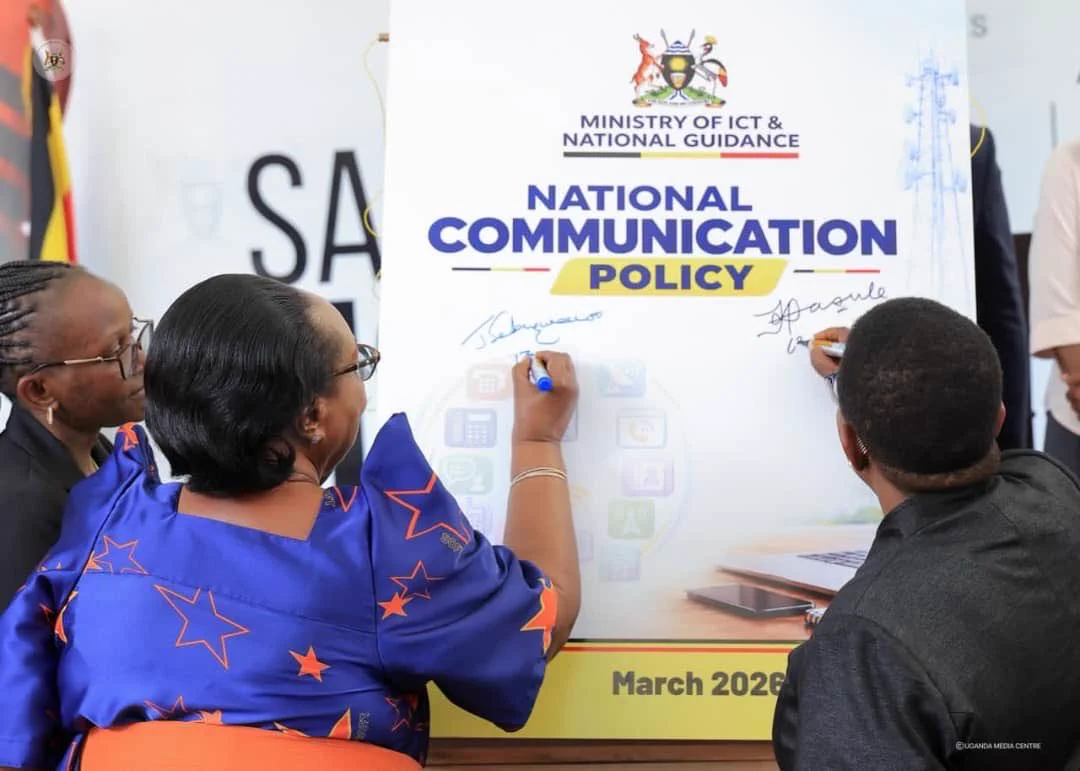
The government now wants to address that problem through the Uganda National Communication Policy 2026, officially launched on October 13th.
Unveiled by ICT and National Guidance Minister Justine Kasule Lumumba, the policy establishes a framework for coordinating government communication, improving public access to information and strengthening engagement between state institutions and citizens.

It also signals a broader recognition that effective public communication is no longer simply about issuing press statements. In an increasingly connected Uganda, information must be timely, understandable and accessible through the channels people actually use.
Why Uganda needed a new communication policy
Government communication has traditionally been handled by individual ministries, departments and agencies, often operating with limited coordination.
This fragmented approach can create confusion, particularly when public programmes involve several institutions.
A national initiative covering agriculture, education or digital transformation, for example, may require information from different government offices. Without consistent communication, citizens can struggle to understand eligibility requirements, application procedures or where to seek assistance.
The new policy seeks to establish common communication standards while making institutions more accountable for the information they provide.
It also addresses misinformation, delayed official responses, crisis communication and inadequate opportunities for public feedback.
The framework was developed following consultations involving government institutions, private-sector representatives, civil society and communication professionals.
Government institutions face new communication responsibilities
One of the policy’s most significant provisions concerns how public institutions plan and manage communication.
Ministries, departments, agencies and local governments are expected to develop communication strategies aligned with the national framework.
Communication officers must also become involved earlier in programme planning rather than being brought in only when announcements are ready.
Permanent Secretary Dr Aminah Zawedde has called on accounting officers to provide communication teams with accurate information, adequate resources and clearer responsibilities.
This approach could change how government programmes are introduced and explained to the public.
Instead of measuring communication success by the number of press releases distributed or meetings organised, institutions will increasingly be expected to consider whether citizens actually received and understood the information.
That distinction matters.
A government announcement has limited value if its intended beneficiaries cannot understand the requirements or act on the information provided.
Digital platforms take centre stage
The policy arrives as Uganda’s communication landscape continues shifting towards mobile phones and social media.
At the launch, Minister of State Joyce Nabbosa Ssebugwawo cited figures indicating approximately 45.7 million active mobile connections and 17 million mobile internet users.
She also highlighted TikTok and WhatsApp as important channels for reaching audiences.
These figures underline the growing importance of digital communication, although mobile connections and platform audience estimates should not automatically be interpreted as unique individual users.
For government institutions, the implications are significant.
Websites, social media accounts and mobile-friendly information services can help distribute announcements faster and reach citizens beyond traditional administrative channels.
However, digital communication also introduces challenges involving misinformation, cybersecurity, accessibility and the verification of official information.
The policy’s success will partly depend on whether government agencies maintain accurate websites, respond promptly to online enquiries and communicate in languages citizens understand.
Who will implement the new framework?
The Ministry of ICT and National Guidance will coordinate implementation through a dedicated secretariat.
Several institutions are expected to play important roles, including the Uganda Broadcasting Corporation, Uganda Media Centre, Government Citizen Interaction Centre, Uganda Communications Commission and National Information Technology Authority–Uganda.
These organisations bring together broadcasting, public information, digital infrastructure and regulatory responsibilities.
Their coordination will be essential, particularly when government messages concern emergencies, public services or national development programmes.
The ministry has also indicated that implementation will involve institutional awareness activities, technical guidance and monitoring.
Importantly, launching the policy does not mean every government institution has already adopted the required systems. Implementation will take additional planning, resources and institutional commitment.
A UGX 200 Billion funding directive raises expectations
The launch also brought attention to the financial resources required to improve public communication.
According to the Uganda Media Centre’s account of the event, Minister Lumumba said President Yoweri Museveni had directed the Ministry of Finance to provide an additional UGX 200 billion to support communication activities.
The reported directive could significantly strengthen the sector if the funding is formally allocated and effectively utilised.
However, a funding directive should not be confused with confirmed disbursement.
Questions remain about the allocation process, institutional priorities, procurement arrangements and how the public will assess results.
Investment in communication infrastructure, staff training, accessible digital services and reliable information systems could deliver lasting benefits.
Equally important will be transparency over how the money is spent.
What the policy means for ordinary Ugandans
For citizens, the most meaningful improvements may be practical rather than technological.
A farmer should be able to establish whether a government agricultural programme is available locally. A student should find accurate scholarship information without relying on rumours. A business owner should understand regulatory requirements without navigating contradictory announcements.
Digital channels could make these interactions easier, particularly when combined with accessible offline communication.
Nevertheless, government must avoid treating social media engagement as a substitute for genuine public accountability.
Citizens need reliable answers, opportunities to raise concerns and clear procedures for obtaining assistance.


