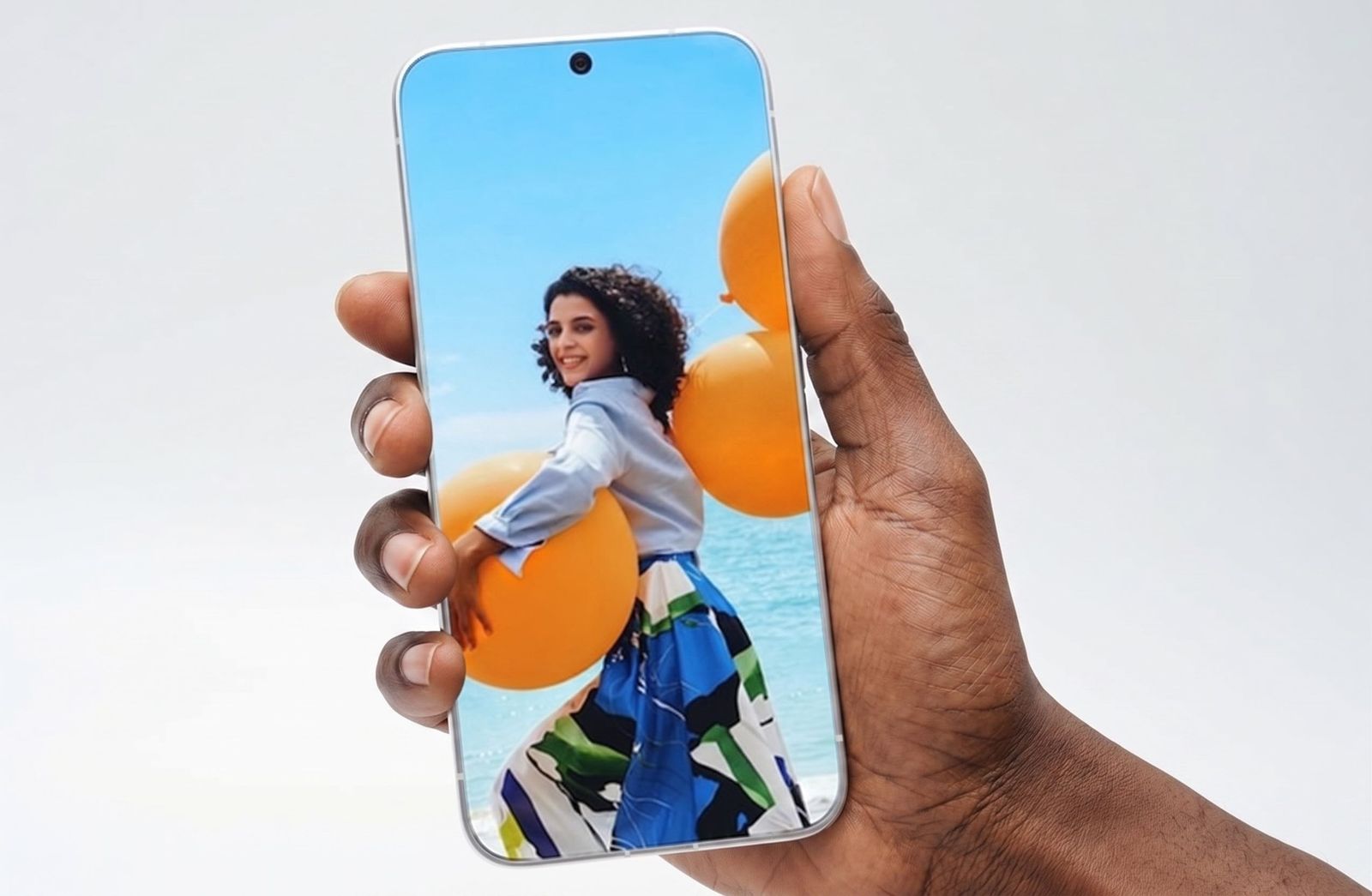


For years, smartphone design treated bezels like a moral failing. Every generation promised to erase them. Every generation stopped just short. A hairline of black around an OLED became the industry’s quiet consensus: small enough that nobody really complained, large enough that the phone still felt like an object you could hold without constantly grazing the screen.
Tecno’s Bezelless concept breaks that consensus in the most literal way possible. There is no visible inactive border. The 6.78-inch 144Hz panel runs to the metal. Look straight on, and the image simply ends where the frame begins. Look at an angle, and you might catch a sliver of black tucked underneath. That is the entire trick: two layers of glass, the OLED and lower glass sliding under the frame, the display mounted from the rear instead of dropped in from the front. It is clever structural engineering, not magic.
It also looks better than it has any right to. The silver frame and the absence of that dark picture frame make the screen feel larger than the numbers suggest. Photos and videos lose their little black fences. Android’s interface finally occupies the whole rectangle instead of floating inside one. Compared with a current flagship like the Galaxy S26 Plus, the overall border is still thinner even if Tecno’s frame itself is a touch chunkier. The phone feels slightly more like a slab of light and slightly less like a gadget wearing a screen. That is a real aesthetic win.

It is not a functional one.
Removing the last black strip does not change how you use a phone. Gesture navigation still has a raised lip that can catch a finger. Durability, drop resistance, and manufacturing yield all get harder when you hide the panel edge under metal and rely on custom adhesives. The punch-hole camera remains. The specs are mid-range. The holographic butterfly back is delightful theater, the same kind of showmanship Tecno has been practicing with neon and E Ink concepts. None of it is coming to a store this year, and probably not next year either. Concepts exist to prove a sentence: “it is possible.” This one does.
That sentence matters more than the device. The industry stopped shrinking bezels because the returns collapsed. Users stopped noticing. Brands stopped spending. Tecno, a company most people in the West still treat as a budget afterthought, just demonstrated that the remaining millimeter was a choice, not a law of physics. Apple has been rumored to chase a true edge-to-edge iPhone for the 20th anniversary. Whether that rumor is real or not, the existence of a working (if fragile) prototype from a mid-tier brand makes the idea feel less like science fiction and more like a calendar problem.
The interesting question is no longer “can we kill the bezel?” It is “what do we do once it is gone?”
A truly frameless phone would be more dramatic than this one. A phone whose glass wraps the entire front and sides would feel like a different object. Under-display cameras, better edge protection, and software that actually uses the extra pixels instead of just stretching the same UI would matter more than another 0.3 mm of screen. Until then, the Bezelless is a beautiful proof and a useful reminder: the last visible bezel was never the hard part. Living with the consequences of removing it is.
We spent a decade chasing a border that most people stopped seeing. Tecno just showed us what sits on the other side of it. The view is prettier. The phone is not transformed. That is both the achievement and the limit.


