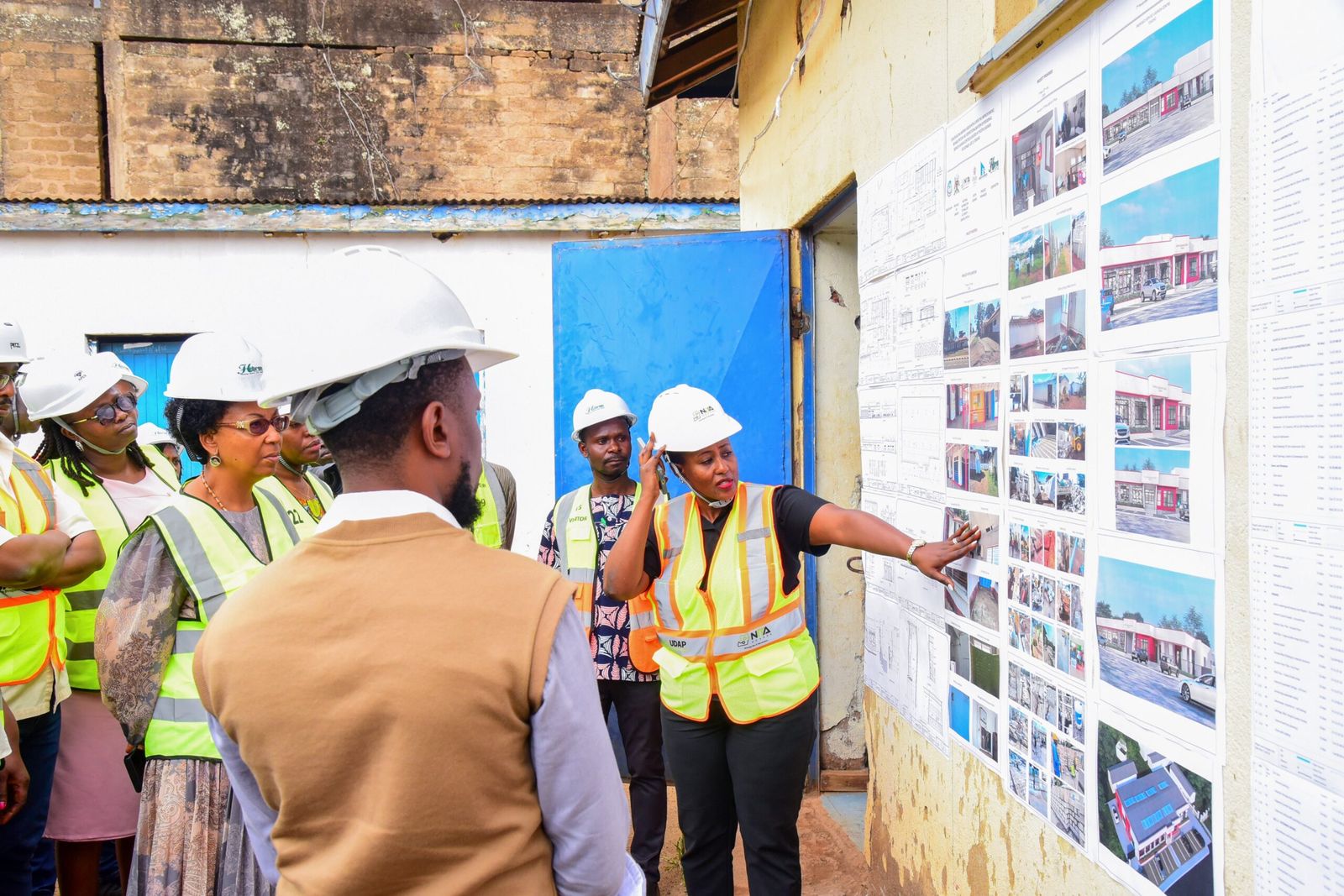


Officials from the Ministry of ICT and National Guidance, the National Information Technology Authority-Uganda (NITA-U), Posta Uganda and the Ministry of Public Service this week inspected the newly renovated Service Uganda Centre in Tororo.
Local leaders including Tororo Municipality’s Deputy Mayor Beatrice Achola, Deputy Resident District Commissioner Fahira Mpalanyi and Town Clerk Alikwan Ayub Kisubi joined the visit. The team focused on checking how far renovation works have progressed and whether the centre is ready to begin full operations.
The Tororo facility is one of 19 Service Uganda Centres planned across the country under the Ministry of Public Service’s One-Stop Centre model. These centres gather several government services in one place.

Residents will be able to handle national ID verification, tax and TIN registration, business registration, passport applications and driving permits without moving from one office to another across town. The approach forms part of the government’s wider push to make public services more accessible and centred on the people who use them.
NITA-U is supporting the renovation of three pilot centres—in Tororo, Mbarara and Gulu—through the Uganda Digital Acceleration Project – Government Network (UDAP-GovNet). This work complements the broader nationwide rollout led by the Ministry of Public Service.
Dr. Aminah Zawedde, Permanent Secretary at the Ministry of ICT and National Guidance, expressed satisfaction with what she saw. “I am encouraged by what I have seen today at the Tororo Service Uganda Centre. The layout clearly prioritises accessibility and user convenience, which is essential for meaningful public service improvement,” she said.
She pointed out that reliable internet connectivity delivered through NITA-U’s National Backbone Infrastructure Phase V project will make the centres run more efficiently. Beyond the physical buildings, she stressed that government must also roll out digital services for both citizens and businesses while keeping online spaces safe.
Dr. Hatwib Mugasa, Executive Director of NITA-U, described the project as a collaborative success. “Upon completion, this site will be transformed into a modern, fully functional service centre. This achievement results from the strong partnership between the Ministry of ICT and National Guidance, NITA-U, the Ministry of Public Service, Posta Uganda as the hosting partner, contractors and supervising consultants,” he said.
Once running, the Tororo centre is expected to offer digital services that create more job opportunities for young people. Residents will also be able to raise grievances with government offices more quickly without travelling to other cities. The facility is planned to serve as a training hub that encourages local innovation and the development of digital solutions.
Catherine Bitarakwate Musingwiire, Permanent Secretary at the Ministry of Public Service, underlined the urgency of finishing the work. “The people of Tororo have waited long enough for such a facility. Our focus now is to ensure full completion so that the centre can open to the public and begin delivering services as expected,” she said. She added that her ministry will keep working closely with all partners to deliver the project successfully.
Mr. James Arinaitwe, Managing Director of Posta Uganda, reaffirmed the organisation’s role as the hosting partner. He said the centres aim to cut the long distances many citizens still travel to access basic public services and to raise the overall quality of service delivery.
The Tororo centre is part of a larger change in how government services reach Ugandans. Instead of scattered offices and long queues, the model offers a single, modern point of access. Six pilot centres are already operating in Entebbe, Kasese, Jinja, Arua, Hoima and at the Ministry of Public Service headquarters. Hoima became the first regional site to open. The remaining 18 centres, including Tororo, are at different stages of preparation.
For residents of Tororo and surrounding areas, the centre promises a practical difference. Tasks that once required multiple trips and long waits should become simpler and faster once the doors open. Reliable connectivity and digital tools are expected to support that shift, while the physical layout has been designed with everyday users in mind.


