

There are technology leaders who build successful companies, and then there are those whose companies become so important that the world almost forgets how much it depends on them.
For the better part of three decades, Jensen Huang belonged to the latter category.
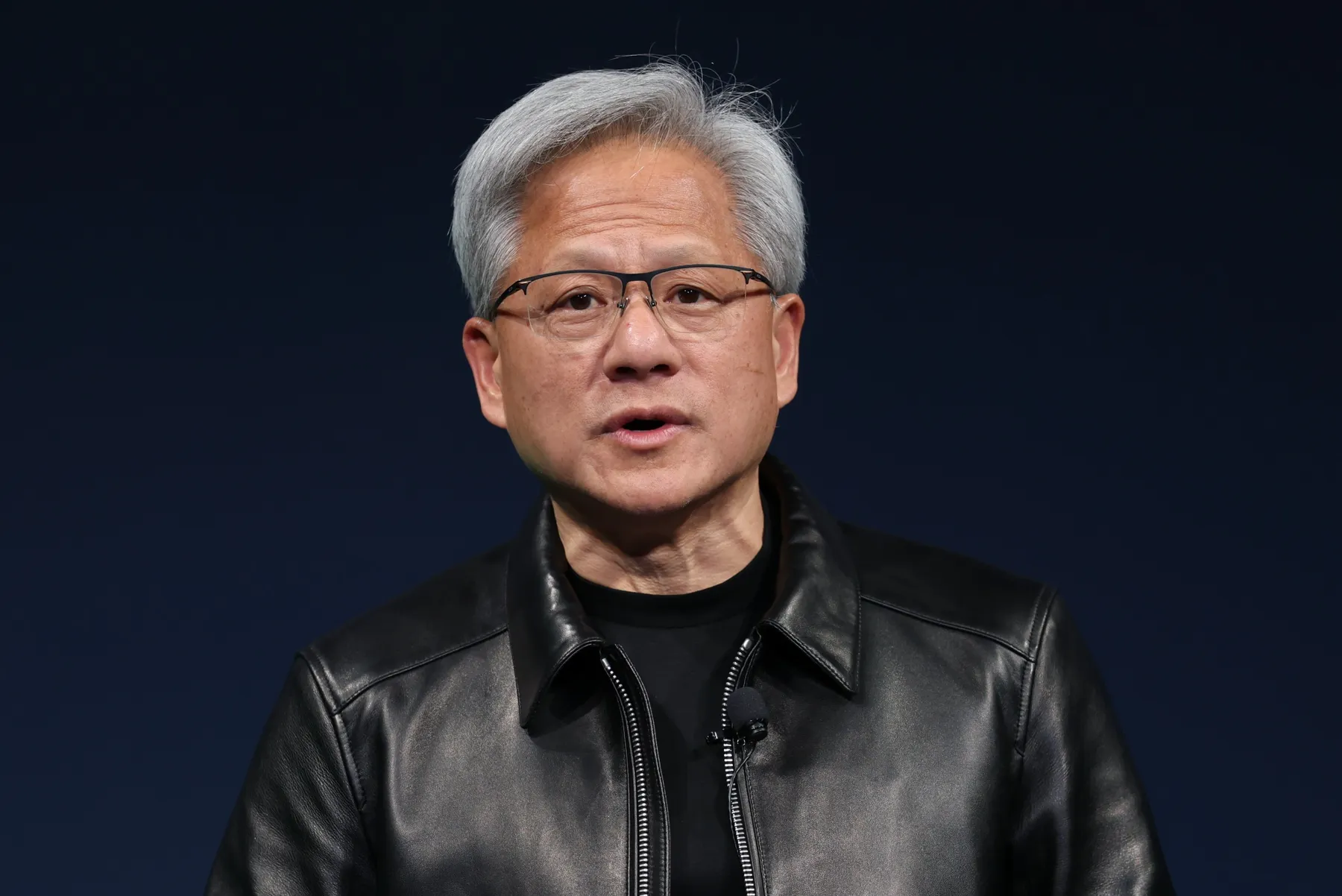
The leather-jacket-wearing NVIDIA co-founder was never just another Silicon Valley CEO. He was the face of a technological transformation that moved artificial intelligence from research laboratories into our phones, offices, hospitals, cars and everyday conversations.

And now, suddenly, he is gone.
On November 12, 2026, NVIDIA confirmed that Huang had resigned as CEO, president and board member, ending his remarkable 33-year leadership of the company he helped establish in 1993.
Chief Financial Officer Colette Kress has been appointed interim CEO, while Harvey C. Jones becomes the company’s first board chairman.
But beyond the corporate announcement lies a fascinating question.
What happens to the AI revolution when one of its most influential architects walks away?
From gaming chips to the engine of Artificial Intelligence
To appreciate the significance of Huang’s departure, we must first understand what NVIDIA has become.
Many people originally knew NVIDIA as the company making graphics cards that helped computers run video games more smoothly.
Today, that description barely scratches the surface.
NVIDIA’s powerful graphics processing units, or GPUs, have become fundamental infrastructure for artificial intelligence. They help train sophisticated AI models and power the systems that respond when millions of people use platforms like ChatGPT.
Companies including Microsoft, Google, Amazon and other technology giants have invested heavily in AI infrastructure, much of it built around NVIDIA technology.
The numbers tell an extraordinary story.
In August 2026, NVIDIA reported quarterly revenue of $96.2 billion, with its data-centre business contributing an astonishing $89 billion.
This is no longer simply a company selling computer components.
NVIDIA has become one of the engines powering the modern digital economy.
And Huang was central to that transformation.
Why Jensen Huang’s resignation matters beyond NVIDIA
The circumstances surrounding Huang’s resignation have attracted considerable attention.
His departure followed reports of personal relationships, including one involving a former executive at Megaspeed, a company facing scrutiny over allegations concerning restricted semiconductor technology and China.
However, those allegations remain under investigation. NVIDIA has stated that it has no reason to believe company secrets or national security were compromised.
The distinction matters.
Yet while the circumstances are significant, the technological consequences may prove even more interesting.
Huang did not merely oversee NVIDIA’s financial performance. He helped determine where the company believed computing was heading next.
From parallel processing and the CUDA software ecosystem to AI data centres and next-generation chips, NVIDIA repeatedly invested in technologies before their full commercial potential became obvious.
That ability to anticipate the future became one of its greatest competitive strengths.
The question now is whether the organization can maintain that ambition without its defining leader.
Will ChatGPT and other AI technologies be affected?
Probably not immediately.
Artificial intelligence systems do not stop working because a CEO resigns.
NVIDIA still has engineers, manufacturing partners, software developers, customers and an extensive product roadmap.
Its Blackwell chips and newer Vera Rubin computing platform remain important parts of the industry’s infrastructure expansion.
But the longer-term picture deserves attention.
Developing advanced AI requires enormous investments in processors, electricity, cooling systems and data centres. These decisions involve billions of dollars and partnerships that extend across several years.
Leadership uncertainty can complicate those commitments.
If NVIDIA’s technological development slows, major AI companies may find themselves looking more aggressively for alternatives.
That could affect the cost, speed and accessibility of future artificial intelligence products.
And this is where the story becomes particularly interesting.
Could NVIDIA’s competitors be the biggest winners?
For years, companies have tried to challenge NVIDIA’s dominance in AI computing.
AMD has been developing increasingly powerful AI accelerators, while Google, Amazon and other technology giants continue investing in specialized chips of their own.
The challenge has never been about producing hardware alone.
NVIDIA also benefits from CUDA, its extensive software ecosystem that developers rely on to build and optimize AI applications.
Moving away from NVIDIA can therefore require significant engineering effort and additional investment.
However, Huang’s departure may encourage customers to reconsider how heavily they depend on one company.
For competitors, the opportunity is not simply to celebrate NVIDIA’s leadership crisis.
It is to demonstrate that the AI industry can function effectively without relying so heavily on a single supplier.
More competition could eventually produce better technology, greater flexibility and potentially lower computing costs.
But none of those outcomes is guaranteed.
The bigger battle between America and China
There is another dimension to this story that deserves attention.
Advanced semiconductor technology has become a strategic asset in the rivalry between the United States and China.
The most powerful AI chips support industries ranging from scientific research to defence and national security.
NVIDIA sits at the centre of that competition.
Huang’s departure, particularly against the background of unresolved security-related allegations, may invite greater scrutiny of semiconductor exports and commercial relationships.
It could also accelerate efforts by countries and technology companies to develop independent AI computing capabilities.
The future of artificial intelligence is increasingly about more than innovation.
It is also about who controls the technology, who can access it and who gets to shape its development.
NVIDIA’s biggest test is just beginning
Perhaps the most fascinating part of this entire episode is what it reveals about leadership.
We often celebrate visionary founders for building extraordinary companies. But the ultimate test of those companies comes when the founders are no longer there.
Apple continued after Steve Jobs. Microsoft evolved beyond Bill Gates. Amazon entered another chapter after Jeff Bezos stepped away as CEO.
NVIDIA now faces its own defining moment.
The company has extraordinary technology, substantial financial resources and a commanding position in one of the world’s fastest-growing industries.
Its future will depend on whether those strengths are institutional or too closely tied to one individual.
The AI revolution is unlikely to stop because Jensen Huang has resigned.
But it may enter a different phase.
One where competition intensifies, alternative technologies gain attention and the world’s largest computing companies reconsider their dependence on NVIDIA.
For now, the chips will continue running, the data centres will continue expanding, and artificial intelligence will continue evolving.
The real question is whether NVIDIA can keep leading a future that Jensen Huang spent 33 years teaching the world to imagine.
And that is a story worth watching.


