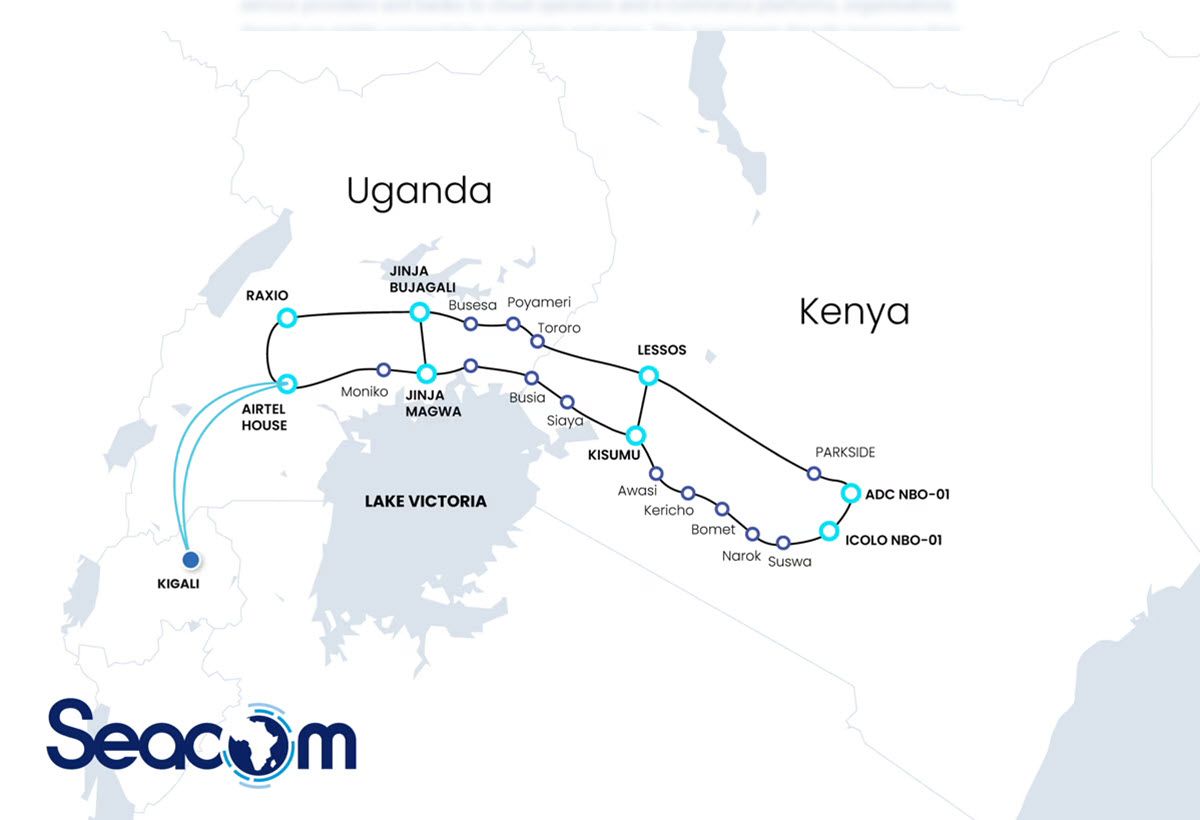


Imagine a major upgrade to the “digital road” that carries internet traffic across East Africa. Seacom announced exactly that: a powerful new land-based fibre route connecting Nairobi (Kenya) to Kampala (Uganda), passing through Kisumu.
ALSO READ: MTN is Secretly Powering Uganda’s First Oil – And It’s Not Just About Phones!
This isn’t just another cable in the ground — it’s a high-capacity backbone designed to make the internet faster, more reliable, and ready for the exploding demand from smartphones, banks, online shopping, and cloud services across the region.

Why This Matters for Everyday Users
Right now, a huge amount of East Africa’s internet traffic travels inland from underwater sea cables that land in Mombasa. The old route between Nairobi and Kampala was starting to feel like a narrow, bumpy road during rush hour. Seacom’s new route turns it into a multi-lane superhighway. The network launches with 1 Terabit per second (Tbps) of capacity — enough to stream millions of HD videos at once — and can grow all the way up to 30 Tbps as more people and businesses come online. That means:
- Smoother video calls and online banking
- Faster loading for e-commerce sites
- Better performance for cloud apps used by companies
- More reliable service even when things go wrong
Built Tough: No More Single Points of Failure
Seacom really focused on making this route super resilient:
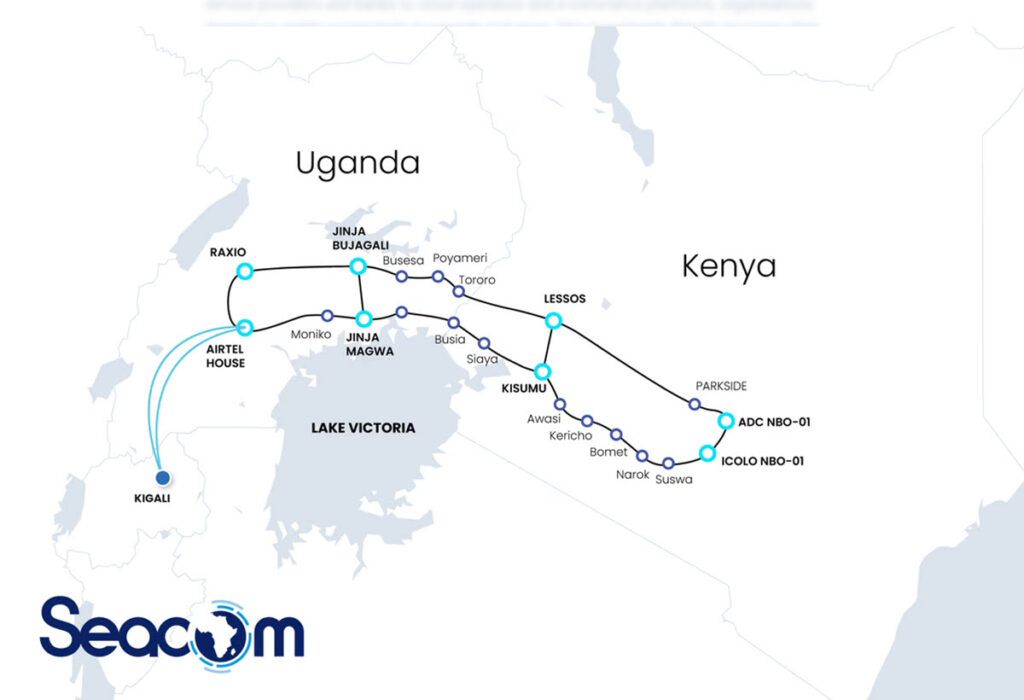
- Two different paths: One follows the usual A104 road, while a new alternative goes via Narok, Kericho, and Kisumu. If one path has a problem, traffic can jump to the other.
- Two border crossings: Instead of relying on just one (usually Malaba), it now uses both Malaba and Busia. This avoids total breakdowns if one border has issues.
- Lightning-fast recovery: The system uses smart Automated Switched Optical Network (ASON) technology. If a fibre is cut or damaged, it can automatically reroute traffic in less than 50 milliseconds — so fast you probably won’t even notice.
The result? Much lower chance of outages and impressively low lag: about 7 milliseconds to Nairobi and 13 milliseconds to Mombasa. That’s excellent for real-time services like mobile money, stock trading, and cloud computing.
David Kariuki, Seacom’s Chief Technology Officer, explained:
“We’re strengthening a route that already plays a central role in regional connectivity. This new high-capacity network will support the scale and performance today’s digital economy requires — from banks and telcos to cloud providers and online shops.”
He added that the biggest winners will be ordinary businesses and users who depend on stable, fast internet every single day.
This project is part of Seacom’s bigger plan to keep upgrading East Africa’s internet infrastructure. Last year, they improved their network in Uganda, and this new route builds on that progress. By making it easier for data to flow reliably between Kenya, Uganda, and neighbouring countries like Rwanda, Burundi, and South Sudan, Seacom is helping the whole region trade, innovate, and grow digitally.
In short, this new “digital highway” is great news for anyone in East Africa who uses the internet, which these days is pretty much everyone.


