Having your eyes degrading with time? Well a DARPA-funded project has built contact lenses that can zoom in and out. This has been made possible by a group of researchers — from the UC San Diego and
the Swiss Federal Institute of Technology (EPFL) — said in a report . The contact lens is capable of a 2.8x zoom and can fit on human eyes. The telescopic lens will rely on a set of 3D glasses from a Samsung TV to activate the lens’ zooming effect. Eventually, the researchers said, they want to build a lens that
wouldn’t rely on such glasses to operate.
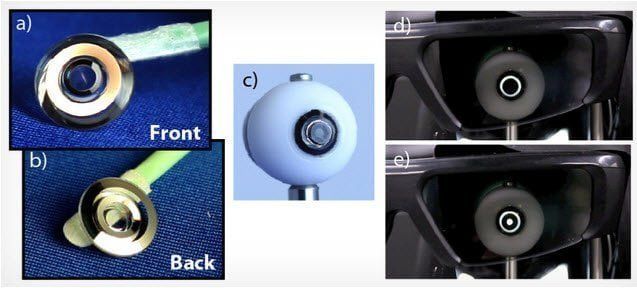
However there are a few other issues to be worked out as well. The current prototype lens is too thick measuring 8mm in diameter, and 1 mm thick — is made of hard plastic, which makes it too rigid for the human eye. The lens hasn’t been tested out on a human being, but rather, a replica eye that is the
same size as a human’s. Even if the zooming contact lens isn’t a fully-finished product, the group noted that it will serve as the basis for ongoing research — a first step toward a zoom lens for your eyeball.