

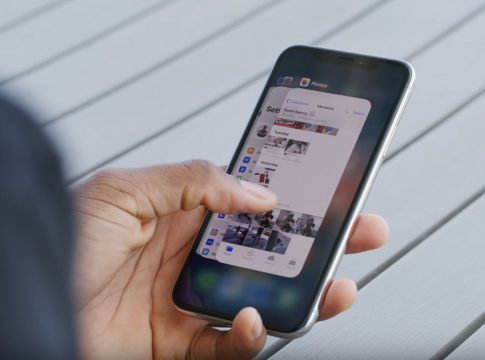

The iOS and Android battle is one that will never end, even as an avid Android user I had always wondered why iPhones that currently max out at only 4GB RAM operate faster than the latest Android phones with 12 or 16 GB RAM. RAM (Random-access memory) is where applications are kept for easy access in case a user needs it, and when tapped, it launches without restarting the app.
It should be noted that Apple’s iOS operates the same way Windows Phones did before its demise. Pundits say that Apple copied Microsoft’s technique, which was actually and a good thing too since Microsoft left the market.
Android works like a desktop operating system because it’s a run-time for Java running on Linux and has multiple apps running at the same time. So how does Apple handle Apps to achieve this RAM efficiency?
The way Windows Phone and iOS handle background activity for apps is totally different from the way Android does it. They only run one app at a time. Apps are not allowed to run in the background, although there are a few background activities they can ask the operating system to perform on their behalf. This has forced Android OEMs like Huawei to implement their own aggressive task killing in their EMUI skin ontop Android Operating system to achive efficiency and battery management.

From launch, iOS itself is and always has been capable of background operations like notifications and music playback. Apple and Microsoft can take responsibility for power management in the software they write themselves. The big problem has always been third party apps, and this answer deals with their solution to that problem.
Background RAM Management
Apps in most cases need things done in the background. This should not be confused with apps needing to run in the background, and this realization is the basis of a pre-emptive process scheduling methodology once used on mainframes. This is the same technique that Microsoft adapted it to phones. Here, an app is not allowed to run in the background, but an app package is allowed to contain a background executable and register it for background execution.
The registration specifies how often it needs to run and how long a time-slice it needs to do its thing. There is an upper limit on how long this can take.
The background app has the lee-way to do its thing and exit within its allotted time saving on RAM. If this fails, it gets a warning message and one more second to clean up and get out. If it’s still running at the end of that second the operating system just closes the process, finalizes any resources it may have been using, and reclaims the memory. It’s actually a brutal process.
Here is the most interesting part — if the operating system has to kill the process three times in a row, it gets blacklisted and is no longer even given a chance. This way the Operating systems ensures that there will be no more shitty performance due to poorly written apps.

When it comes to Android, its just a shit show, and here is why high-end phones like the Galaxy S20 Ultra have to be backed up over 16 GB RAM, unlike iPhones. Misbehaving Android apps can stay in RAM with all their resources polling Facebook, Instagram, or Snapchat notifications and leaving your GPS switched on while your battery juice is drained out.
Microsoft saved the day
At the time Microsoft did this stuff, Apple simply refused to allow background processes at all, but this was something users really wanted. Apple later adopted it and it gave them what they wanted — background processing with good resource management and smooth response.
Please note that Apple’s own apps initially never followed this RAM saving law, it only applied to third party apps. Later Apple issued an update to fix the battery drain. Similarly, since Microsoft stopped caring about phones several baked-in Windows Phone apps — Camera and Maps in particular — are no longer well behaved and must be manually killed off immediately after use to preserve battery life.
Another reason Apple and Microsoft phones perform consistently better than Android is that carriers can customize Android, and the quality of their work frequently leaves much to be desired. Some people like me regard the customisability of Android as a virtue. It’s not a defect but it’s certainly the vector by which a lot of defects are introduced.


