


Samsung’s new Galaxy Watch 4 comes with a slew of health features which include blood oxygen measurement, a bioactive sensor, sleep analysis, blood pressure/ECG monitoring. The latest of these features is body composition which is used to calculate body fat percentage and muscle mass, the company announced yesterday. It’s the latest tech company to offer a body composition feature.
Body fat is generally a better way to assess health than weight, but it’s often calculated using a metric called the body mass index (BMI), which is often seen as crude and inaccurate. If wearables like the Wacth 4 prove accurate, they could give people a better resource to monitor their health.
ALSO READ: Samsung infuses Google’s Wear OS in its latest Galaxy Watch 4 series

The Galaxy Watch 4 measures body composition using a technique called bioelectrical impedance analysis (BIA), which sends a weak electric current through the body. It’s calculating the amount of water in the body — the signal moves more quickly through tissue that has higher percentages of water. Since fat has a lower water content than muscle, the technique can estimate how much fat is present in a person’s body.
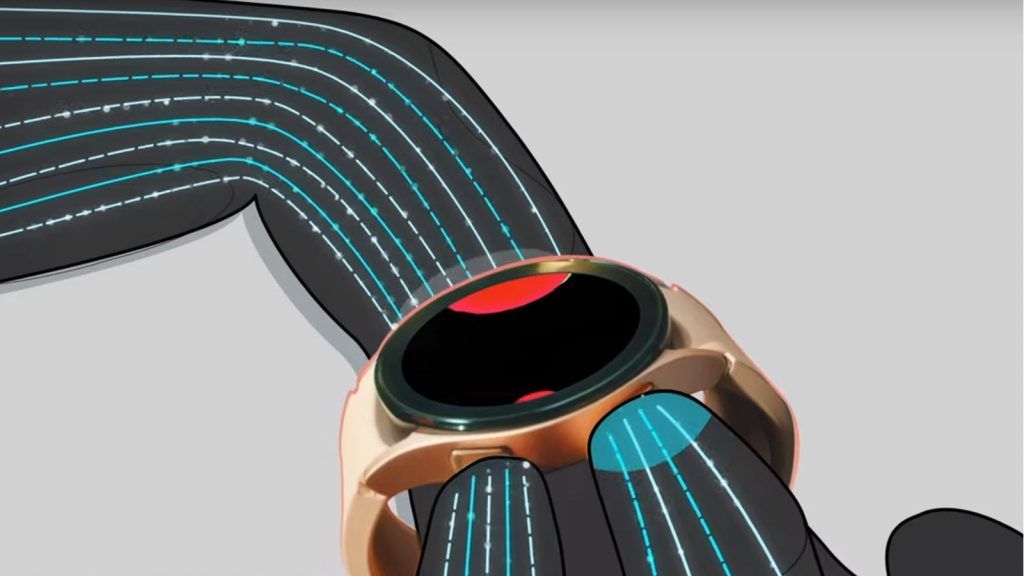
Bioelectrical impedance analysis can give an estimate of body fat, but it has limitations according to experts. The problem is that there isn’t a perfect clear alignment between the amount of water in the body and body fat, this is because the amount of water in the body varies over time and is not a constant. During exercising or when you drink water a lot of water, it will go down and up respectively. One study found that BIA overestimated body fat if the measurement was taken right after someone drank around two cups of water.
Most available devices that use BIA to track body composition send the current through the soles of the feet (like a smart scale) or through the palms. Samsung shrunk the sensors down to fit on the back of the watch. The company’s Healthcare Sensor Lab published a study in January 2021 describing the technology. In the study, 203 people had their body composition analyzed by the watch, two other BIA devices, and a device that uses dual-energy X-ray absorptiometry (DXA) — an X-ray technique that shows fat distribution through the body, which is considered the gold standard for body composition measurement.
:no_upscale()/cdn.vox-cdn.com/uploads/chorus_asset/file/22778694/Screen_Shot_2021_08_12_at_1.36.43_PM.png)
The company said that they tried to put the sensors in different devices including remote controls, smartphones, etc but the smartwatch gave more accurate readings compared with the other devices and the DXA measurement, the analysis found. Its calculations were also slightly closer to the DXA measurement than one of the two other BIA devices. Overall, the watch appears to work as well as a smart scale based on this study.
:no_upscale()/cdn.vox-cdn.com/uploads/chorus_asset/file/22778738/Screen_Shot_2021_08_12_at_1.50.21_PM.png)
Samsung’s app directs users to take photos of their body, which it combines into a 3D image used to calculate body fat percentage. The system also gets an accurate measure of body fat compared with the DXA.
At the very least, both apps appear to work better than BMI at calculating body fat percentage. BMI is frequently used to guide medical decision-making, even though it’s often misleading — which can skew the diagnosis of some conditions and perpetuate weight-based stigma in healthcare. It’s used, though, because it’s cheap and easy. Most people don’t have access to the more accurate, expensive machines.
It’ll take more research to figure out how reliable the wearables can be in a real-world setting. But they’re easy to use and relatively cheap. If they work well enough to flag trends in people’s body composition that could affect their health, they could make these health metrics more accessible.


