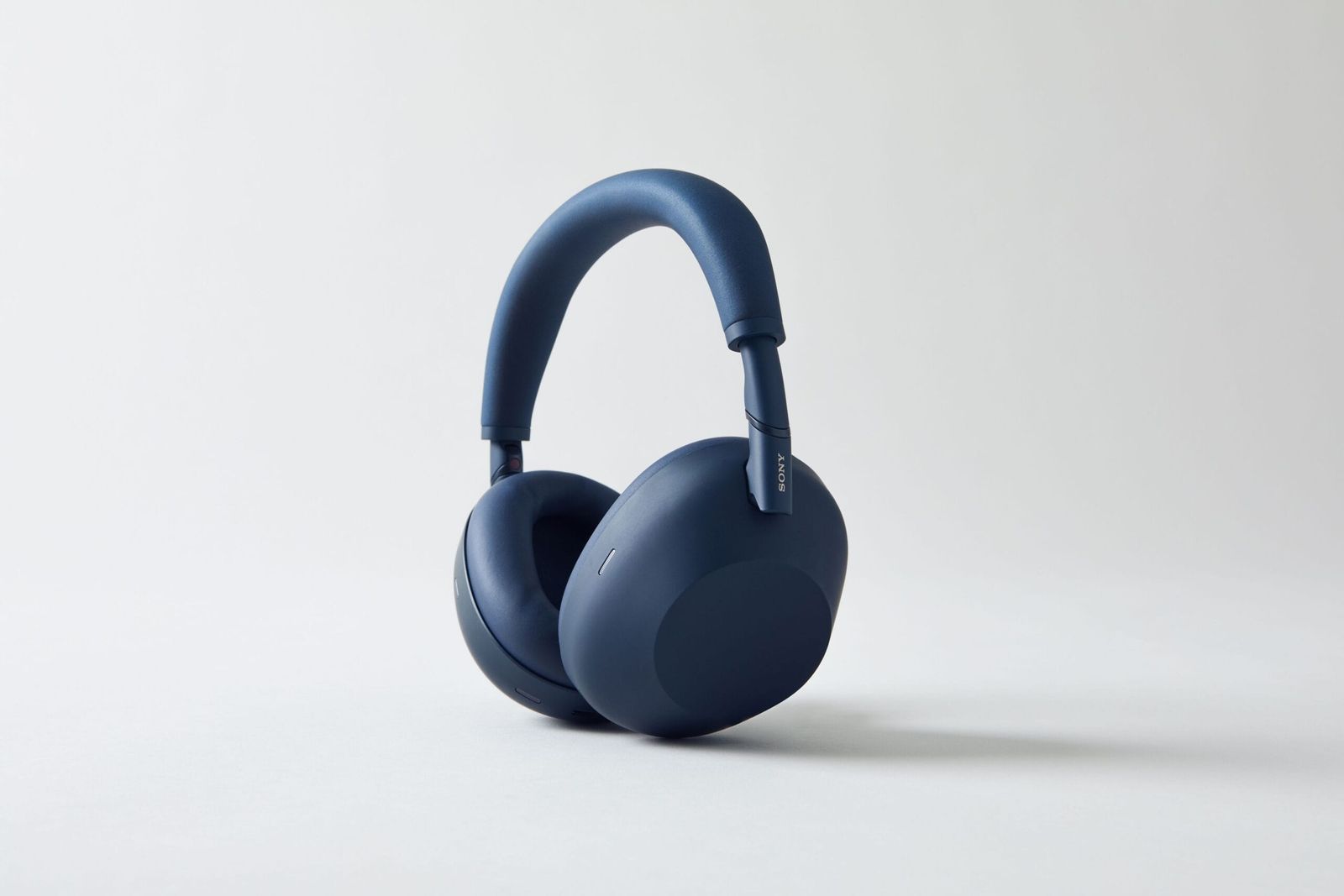


Noise cancellation is now one of the most heavily promoted features in consumer audio products. In any electronics store, you’ll see it advertised across packaging at every price range, be it the budget earbuds or the premium over-ear models.
But what is actually going on inside those headphones, and does the technology live up to all the marketing claims? Grasping the distinction between the different types of noise cancellation can help you avoid wasting money and choose the pair that truly matches your needs.
Two completely different technologies

This is where many people get confused: the term “noise cancellation” is applied loosely to two entirely separate approaches. One purely physical, the other electronic. Understanding which type you’re actually buying makes a huge difference.
Passive noise cancellation
Passive noise cancellation, often referred to as passive noise isolation, uses no electronics whatsoever. It works purely through physical design and materials to block external sound.
Well-designed over-ear headphones with thick, cushioned earpads, or in-ear earphones fitted with silicone or foam tips that create a tight seal in the ear canal, stop outside noise the same way good earplugs do; by forming a solid barrier between your ears and the environment.
How effective passive isolation is depends entirely on the quality of the seal and the materials used. A poorly fitting earbud with flimsy rubber tips will allow far more ambient sound to leak in compared to one with memory-foam tips that adapt to the shape of your ear canal. Likewise, lightweight on-ear headphones will always let in more noise than closed-back over-ear models with dense padding.
Passive isolation performs best against higher-frequency sounds practical in elements like conversations, typing sounds, or office chatter. It is much less effective against deep, low-frequency noise, such as the constant rumble of an airplane engine or an air-conditioning system.
No batteries needed. No digital processing. Just clever engineering and quality materials.
Active noise cancellation
Active Noise Cancellation (ANC) is where the real sophistication comes in. Instead of simply blocking sound physically, ANC employs electronics to actively counteract it.
The process works like this:
Tiny microphones on the headphones constantly capture the external noise around you. A built-in processor analyzes this incoming sound in real time and creates an opposing sound wave, identical in frequency and amplitude, but flipped in phase (inverted). When this “anti-noise” wave is played through the headphone drivers along with your music or audio, the two waves interfere with each other and cancel out. The outcome is reduced noise, often approaching near-silence.
This analysis and cancellation cycle repeats thousands of times per second, constantly adapting to changes in the surrounding sound.
ANC excels at handling steady, low-frequency noises; precisely the kind that passive isolation has the hardest time blocking. Examples include the continuous drone inside an airplane cabin, the low rumble of a train, or the steady hum from HVAC systems. These predictable, consistent sounds are ideal for ANC because their patterns can be accurately mirrored and neutralized.
It struggles more with abrupt, unpredictable noises — a slamming door, a sudden shout, or sharp transient sounds — because those occur too quickly for the system to analyze and generate a precise inverse wave in time.
Feedforward, feedback, and hybrid ANC systems
Not every ANC implementation works the same way. The location of the microphones determines the system’s strengths and limitations.
- Feedforward ANC positions microphones on the exterior of the ear cups, capturing noise before it reaches your ears. This allows faster reaction times but can have difficulty with rapidly changing or directionally complex sounds.
- Feedback ANC places microphones inside the ear cups, closer to your eardrum. It does a better job of addressing noise that has already leaked through, though it has less time to process and respond.
- Hybrid ANC uses both external and internal microphones, combining the advantages of both approaches. This provides the system with more complete information and is generally the most effective type available in consumer headphones today. Premium models almost always use hybrid ANC.
What this means for your next purchase
If you’re a frequent commuter, airplane traveler, or someone working in an open office, a high-quality hybrid ANC system is often worth the extra cost. The gap between poorly implemented ANC and a well-tuned, premium version is very noticeable in real-world use.
For casual listening at home, workouts at the gym, or lighter daily use, strong passive isolation from a secure, well-fitting design can deliver excellent results — without the added expense, battery drain, or occasional minor artifacts like faint hiss or pressure sensations that some people notice with ANC.


