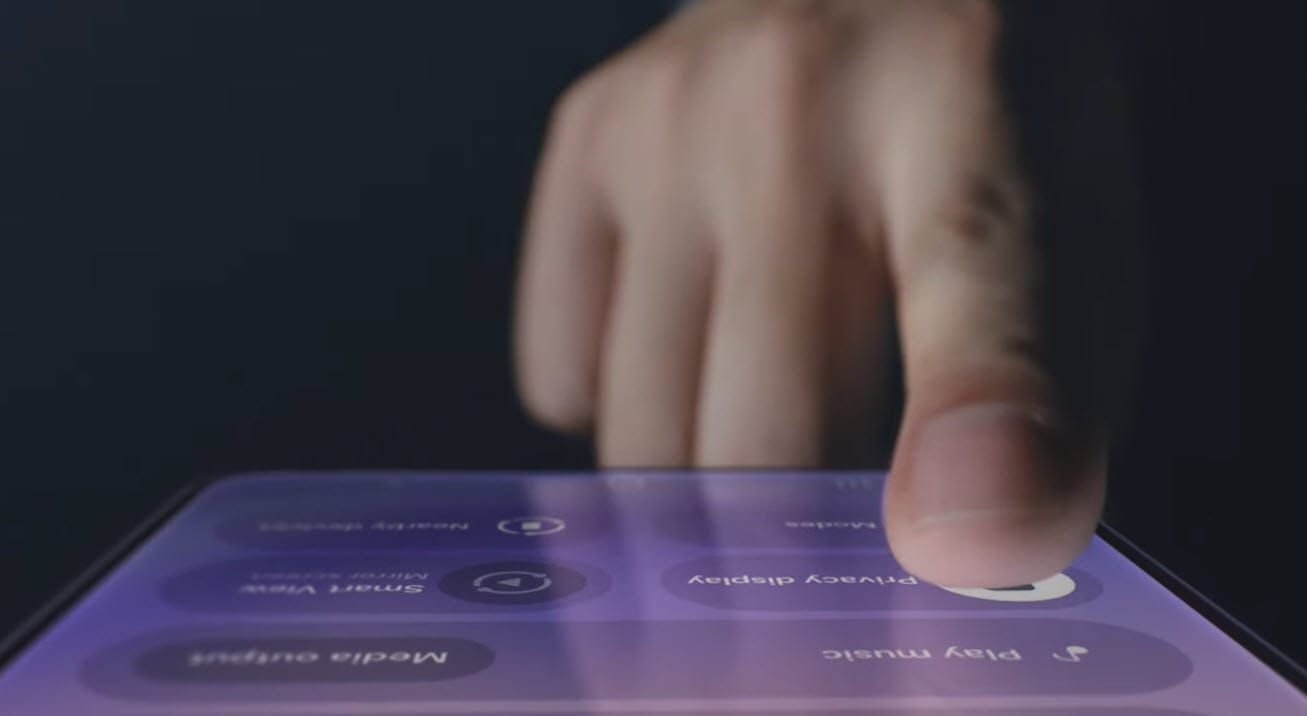


In a world where our smartphones are extensions of our minds—holding everything from banking details to intimate conversations—privacy has never felt more fragile. Enter the Samsung Galaxy S26 Ultra’s new Privacy Display, a feature that’s not just innovative but downright essential in 2026. This tech feels like a breath of fresh air amid the stagnation of incremental hardware upgrades. It’s not revolutionary in concept—similar ideas have popped up in laptops like HP’s Sure View back in 2016—but Samsung’s execution on a flagship phone could redefine how we protect our digital lives on the go.
ALSO READ: How noise cancellation really works
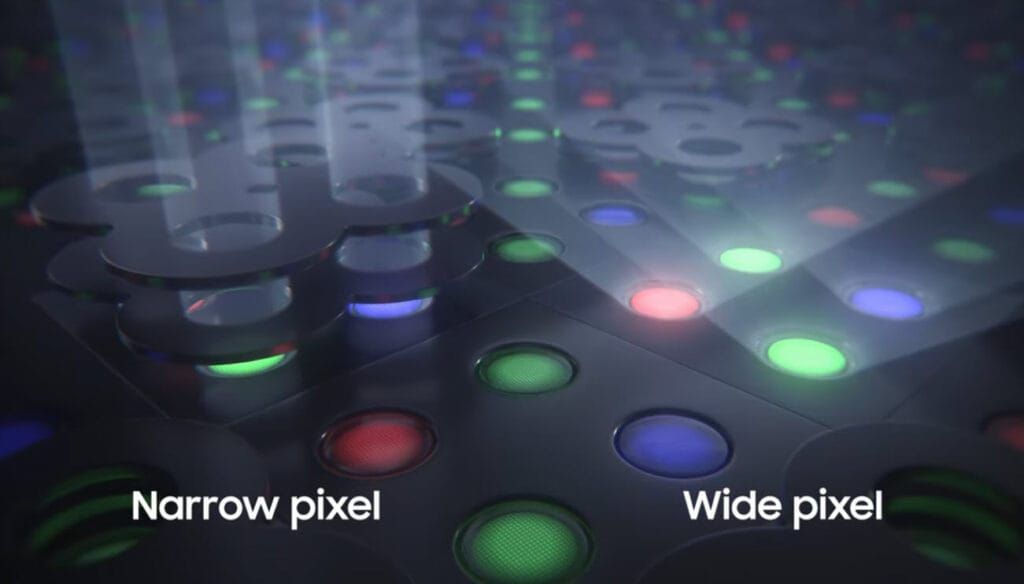
At its core, the Privacy Display leverages advanced OLED pixel architecture through a technology called Black Matrix (or Flex Magic Pixel in some descriptions), which integrates two distinct types of subpixels: narrow-angle pixels and wide-angle pixels. These differ in how they disperse light—narrow pixels direct light primarily straight forward in a tight beam (around 90 degrees for optimal head-on visibility), while wide pixels spread light broadly in multiple directions for standard wide-angle viewing.
When the feature is turned off, both narrow and wide pixels operate at full capacity, delivering crisp, vibrant content visible from nearly any angle. But when Privacy Display is activated, the wide pixels are dimmed to a minimal level or effectively turned off, leaving the narrow pixels as the primary light source. This drastically reduces side-angle visibility, making the display appear washed-out, low-contrast, and often nearly black from oblique perspectives—text becomes illegible, colors mute, and shoulder surfers see little to nothing.
The hardware-level approach limits the effective viewing angle to roughly 30-45 degrees (or even narrower in maximum mode), all without needing external privacy films or accessories. What impresses me most is the customization depth—it’s not a blunt instrument. You can toggle it via Quick Settings, with modes like “Maximum Privacy Protection” for full-screen obfuscation or partial application to hide just notifications, incoming messages, PIN entries, or specific apps (like banking or Secure Folder). Integrate it with Samsung’s routines for automatic activation—say, when leaving home Wi-Fi or in public locations—and it adapts dynamically in both portrait and landscape orientations. Sensors and software even help fine-tune the effect, ensuring your straight-on view stays bright and clear while others get blocked.
This isn’t just gimmicky; it’s practical genius. In an age of rising cyber threats and casual snooping—think data breaches, identity theft, or even just nosy coworkers—the S26 Ultra’s feature addresses a real pain point. Shoulder surfing might sound quaint, but it’s a gateway to serious vulnerabilities. I’ve lost count of the times I’ve angled my phone away from prying eyes on public transport, and this tech promises to make that paranoia obsolete. The phone itself is a modest evolution—slimmer at 7.9mm (down from 8.2mm), lighter at 214g (down from 218g), and swapping titanium for an aluminum frame to blend better with the S26 lineup, complete with curved corners. Camera upgrades include a brighter 200MP main sensor at f/1.4 (up from f/1.7) and a 50MP 5x zoom at f/2.9 (from f/3.4), powered by the Snapdragon 8 Elite Gen 5 chipset tailored for Galaxy, with 12GB RAM and 256GB storage options. But the Privacy Display steals the show, proving software smarts and pixel-level hardware can outshine raw specs.
That said, no feature is perfect, and potential downsides remain worth considering. Selectively powering down wide pixels could impact battery life in prolonged use, though efficient management likely helps. Accessibility concerns arise too—users with visual impairments might find the narrowed angles or dimming frustrating, and it could complicate shared viewing, like showing photos to friends. The $1,299 starting price holds steady despite economic pressures, but one wonders if this breakthrough privacy upgrade shouldn’t command a premium—or if Samsung is wisely keeping it accessible. Preorders include up to $200 in gift cards, sweetening the deal in a market with Apple’s ecosystem lock-in and Google’s AI focus.
Comparatively, competitors like Apple emphasize privacy through Face ID and app tracking controls, but lack this hardware shield against physical peeking. Google’s Pixel line prioritizes software protections yet offers no equivalent tactile defense. Samsung deserves credit for mainstreaming pixel-level privacy on a phone, nodding to rising demands in a surveillance-heavy world—GDPR expansions, VPN surges, and anti-data-hungry app backlash.

Ultimately, the Galaxy S26 Ultra’s Privacy Display isn’t just a feature; it’s a statement. In 2026, as AI and connectivity blur public and private lines, tools like this empower users to reclaim control. I’m bullish on its influence on future designs—if it delivers glitch-free in the real world, it could make the S26 Ultra a must-have for privacy-conscious buyers. Samsung, you’ve got my attention—now prove the rollout matches the promise.


