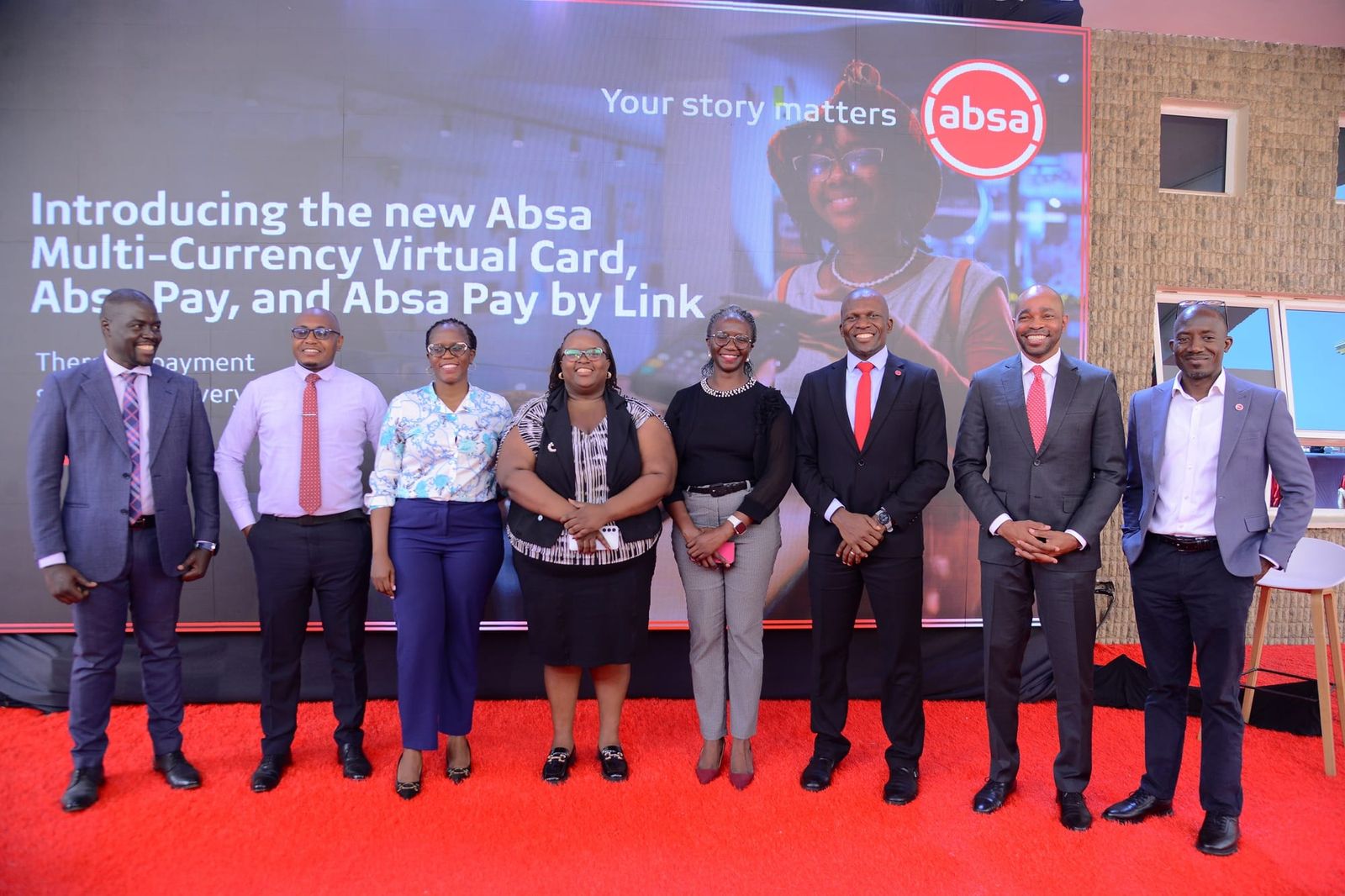


Absa Bank Uganda has unveiled three powerhouse digital payment tools: the Absa Multi-Currency Virtual Card, Absa Pay, and Absa Pay by Link. Launched amid a surge in mobile banking adoption, these innovations promise to strip away the friction from everyday transactions.
At their core, these are a seamless ecosystem designed for a nation where digital payments are exploding. The Bank of Uganda’s Integrated Annual Report for June 2025 paints a vivid picture: active mobile banking users have climbed 6.5% to 2.1 million, while transaction values rocketed 39.4% to a staggering UGX 15.5 trillion. This is the groundwork for a cashless Uganda, where SMEs can ditch bulky cash floats and millennials can lock in exchange rates mid-scroll on their favorite e-commerce site. Absa’s timing couldn’t be sharper, aligning perfectly with a broader continental push toward digital economies projected to hit $1.5 trillion by 2030.
But let’s break it down: How do these tools work, and why should you care?

Absa Multi-Currency Virtual Card
Imagine you’re planning a trip to Europe, shopping online from a US site, or paying a South African freelancer—all without sweating over exchange rates or hidden fees. That’s where the Absa Multi-Currency Virtual Card shines. In simple terms, it’s like having a magic wallet on your phone that holds multiple types of money at once. You can load and manage up to five different currencies: Ugandan Shillings (UGX), US Dollars (USD), Euros (EUR), British Pounds (GBP), and South African Rand (ZAR). No need for separate accounts or physical cards; everything lives in one secure spot via the Absa app.
First, you sign up through the Absa Mobile Banking App (available on iOS and Android). Once you’re in, you can “create” a virtual card instantly—think of it as printing a digital version of a debit card on the fly, without waiting for plastic to arrive in the mail. Topping it up is straightforward: Transfer funds from your Absa current or savings account (CASA), or even link a credit card for quick reloads. You can also use mobile money options like Airtel or MTN for uploads, making it super accessible if you’re not fully banked yet.
The real beauty is in the flexibility. Say you’re booking a flight on a European airline—you switch to Euros in the app, lock in the current exchange rate to avoid nasty surprises if the market fluctuates, and pay seamlessly. For online shopping on sites like Amazon or Jumia Global, generate a new virtual card number for each transaction to keep your main details safe. A Kampala-based importer can pay suppliers in USD without the usual bank queues or high conversion costs. Plus, features like “Card Send” let you share a virtual card with someone else (maybe a family member abroad), track every spend in real-time, and even transfer or redeem unused balances back to your account. Security? It’s top-notch with encryption, one-time-use options, and app-based controls to freeze or delete cards if something feels off. No more carrying wads of foreign cash on trips—reduce risks, cut costs, and travel smarter. If you’re an Absa customer, it’s free to set up, though standard transaction fees might apply depending on your plan.
Absa Pay
This is basically turning your smartphone into a super-secure, no-fuss payment machine. Forget digging through your bag for a physical debit or credit card— this is contactless paying at its easiest. In layman’s terms, it’s a digital version of your card that lives right on your phone, ready for taps at shops, restaurants, or even public transport.
If you’re an Absa customer, open the Absa Internet Banking App (or Mobile Banking App), head to the “Card Management” section, and self-register in minutes—no branch visits, no paperwork. You’ll link it to your existing debit or credit account, and voila, your phone becomes the card. To pay, just hold it near a contactless terminal (those machines with the wave symbol) at places like supermarkets, fuel stations, or cafes in Kampala. It’s powered by Visa, so it works wherever contactless is accepted, locally or abroad.
For security, it uses advanced tech like tokenization (where your real card number isn’t shared) and biometric locks (fingerprint or face ID) to approve payments. If you lose your phone, remote deactivation keeps things safe. Benefits abound: It’s faster than cash (no change hassles), more hygienic (post-COVID win), and flexible for daily life—pay bills, top up airtime, or split dinner bills with friends. For those wary of carrying cards, it’s a game-changer, especially with Uganda’s rising theft reports in urban areas. Activation is instant and free for existing customers, with no extra charges beyond your usual card fees.
Absa Pay by Link
This hands businesses a magic wand: generate a secure Visa link, share it, and watch payments ping into your account in real-time—no cash, no delays. This one’s tailored for entrepreneurs, like shop owners, freelancers, or service providers who want to get paid quickly without the drama of cash handling.
It’s like sending an invoice that’s also a payment button. As a business banking customer, you log into your Absa app or online portal, create a customized payment link for a specific amount (say, UGX 500,000 for a graphic design job), and share it via WhatsApp, email, or SMS. Your client clicks the link, enters their Visa-enabled card details on a secure page (no need for them to have an Absa account), and boom—payment settles instantly into your Absa business account. No waiting for bank transfers or chasing checks.
Security features include fraud detection, encrypted links that expire if unused, and real-time tracking of payments. For eligibility, you need an Absa business account; setup is via the app under payment tools, and while there might be minimal transaction fees (like standard Visa processing), it lowers overall costs by ditching physical POS machines. This tool empowers traders to scale efficiently, turning “pay later” into “pay now” and boosting operations in Uganda’s vibrant informal economy.
All three are fortified with top-tier cybersecurity, ensuring your data stays locked tighter than a boda boda rider’s helmet. This launch is the latest chapter in Absa’s digital playbook, following hot on the heels of their May 2025 Digi Loans and self-service account openings, which have already funneled instant credit to thousands without a single branch visit. As Uganda’s fintech scene heats up—with mobile money accounts swelling to 45.6 million by September 2024 —Absa is positioning itself as the bridge between traditional banking and the mobile-first future.
What they say
Moses Rutahigwa, Retail and Business Banking Director at Absa Bank Uganda, kicked things off with a rallying cry: “We are excited to introduce these solutions that simplify payments both locally and internationally. From managing multiple currencies while travelling or transacting online, to enabling fast, contactless payments for everyday use, and supporting SMEs with instant settlement, these innovations reflect our commitment to empowering our customers in today’s digital economy.”
Rutahigwa doubled down later, tying the rollout to Uganda’s fintech boom: “The rapid growth in digital payments over the last four years confirms that Ugandans are ready for fast, secure, and convenient digital-first payment solutions, both locally and internationally. Therefore, these new solutions are timely and relevant as they align with the rapid digital transformation taking place in Uganda.”
Echoing from the payments giant’s corner, Chad Pollock, VP and GM of Visa East Africa, hailed the synergy: “I’m proud to witness Absa Uganda launch Absa Pay, Multicurrency Virtual Cards, and Pay-by-link for Merchants. These innovations arrive at a time when digital payments in Uganda are surging. With over 2.1 million active mobile banking users and transaction values reaching UGX 15.5 trillion, it is clear that Ugandans are ready for digital-first solutions that are seamless, safe, and fit for purpose.”
Tackling Uganda’s cash trap and border blues
Uganda’s economy is a powerhouse of potential—SMEs alone drive 70% of GDP and 90% of jobs, per the Ministry of Trade’s 2015 MSME Policy (with trends holding steady into 2025). Yet, beneath the vibrancy lurks a stubborn cash dependency that’s choking growth.
Cash reigns supreme in informal sectors, from roadside kiosks to rural tea farms, where over 43% of adults remain unbanked and transaction fees, literacy gaps, and spotty networks keep digital tools at arm’s length. For smallholder farmers, for instance, cash payouts for harvests persist because fewer than 21% have mobile money accounts, saddled by high costs and regulatory hurdles.
This isn’t just inconvenient, it’s risky. Merchants juggle theft, counterfeit notes, and endless bank runs, while women entrepreneurs, who face steeper affordability barriers, are often sidelined.
Enter Absa’s trio: The direct antidotes to these societal snags.
The Multi-Currency Virtual Card slashes cross-border pains, a boon for Uganda’s export-driven SMEs eyeing African markets. With intra-African trade hampered by high fees and delays, this tool lets users lock rates and transact in real-time across five currencies. It’s a game-changer for the 400 million+ Africans grappling with border barriers, aligning with Smart Africa’s IDECT project to harmonize systems by 2025.
Absa Pay zaps everyday hassles, ditching physical cards for phone-based contactless magic. In a country where mobile money hit UGX 253.7 trillion in 2024 (up 31.5% year-on-year), this self-registration via app empowers the 76% of Ugandans with mobile connections but uneven internet access. No more fumbling for wallets at events, where tap-to-pay has already slashed cash queues.
And Absa Pay by Link? It’s SME rocket fuel. Businesses generate links for Visa card payments, settling instantly—no cash floats, no delays. This tackles the $136-170 billion African SME financing gap, where only 35% of sub-Saharan payments are digital due to trust issues and fees. For traders and service providers, it’s a lifeline: accelerate sales, cut theft risks, and scale without collateral woes. As UNCDF’s 2025 report urges, expanding beyond payments to credit and savings is key to hitting 75% financial inclusion by 2028. Absa’s cybersecurity backbone addresses privacy fears, a top policy blind spot per recent studies.
In essence, these tools do not only solve problems but they as well ignite progress. By curbing cash’s grip (still dominant in transport and agriculture), they boost inclusion, cut costs, and fortify against fraud, paving the way for a resilient economy amid global uncertainties.


