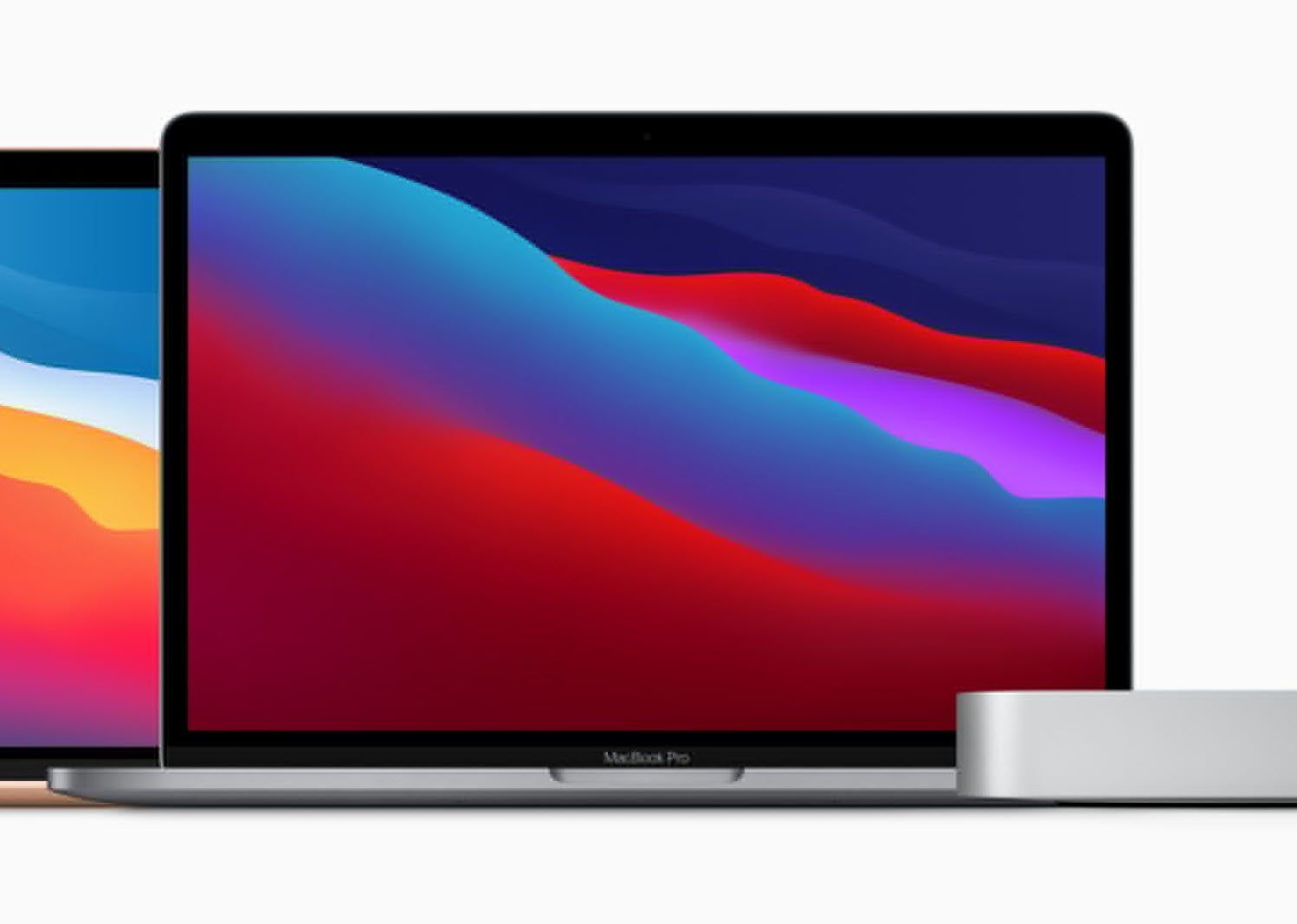


Apple has today unveiled its first-ever MacBook Pro laptop using its own on an Apple-designed processor ditching Intel forever, and this ushers in a new era of Mac computers.
It’s not just that Apple is making an Arm-based Mac — it’s that Apple is specifically making an Arm-based MacBook Pro, products that it has emphasized as a core part of its lineup for both creative and technical professionals.
The new MacBook Pro comes in a 13-inch size and starts at $1,299. It’ll feature Apple’s new M1 processor, which the company says features the “world’s fastest CPU core,” the fastest integrated graphics, and big power and performance gains compared to the Intel chips it had previously used. Both laptops will launch with macOS 11 Big Sur, which Apple says that it designed to work on the new hardware.

Apple says that performance on the new 13-inch MacBook Pro is 2.8 times as fast, with graphics that are up to five times faster than the previous generation. And unlike the new MacBook Air, it still features an active cooling fan system. There’s still a touch bar, along with two Thunderbolt 4 ports (located on the left side of the laptop.)
Incredible battery life

Battery life is also getting a big jump — up to 17 hours of web browsing, and 20 hours of vide playback. Apple says that that’s 10 hours longer than before, and the longest battery life ever offered on a Mac.
It’s a big leap forward, not just for Apple’s in-house chips, but for Arm-based laptops in general, which have largely been relegated to ultralight form factors and devices like the Lenovo Flex 5G, Samsung Galaxy Book S, or the Surface Pro X. No one has made an Arm-based laptop that promises the kind of performance that Apple claims these new MacBook Pros can offer.
When compared to the previous generation, the M1-powered MacBook Air can:
- Export a project for the web with iMovie up to 3x faster.
- Integrate 3D effects into video in Final Cut Pro up to 5x faster.
- For the first time, play back and edit multiple streams of full-quality, 4K ProRes video in Final Cut Pro without dropping a frame.
- Export photos from Lightroom up to twice as fast.
- Use ML-based features like Smart Conform in Final Cut Pro to intelligently frame a clip up to 4.3x faster.
- Watch more movies and TV shows with up to 18 hours of battery life, the longest ever on MacBook Air.
- Extend FaceTime and other video calls for up to twice as long on a single charge.
Apple has been preparing for this since it first announced that it’d be switching over to its own chips, with the company already showing off applications like Microsoft Office and Adobe Photoshop and Lightroom running on Apple chips back in June. (Although it’ll clearly take some time to roll those out: Lightroom won’t be available on Apple silicon until next month, and other key apps, like Photoshop, won’t launch until 2021.) And of course, Apple’s own pro-level applications, like Final Cut Pro or Logic, have also already been fully ported to work on Apple silicon Macs.
A new MacBook Air abd Mac Mini
Apple has also announced a new MacBook Air which is Apple’s most popular Mac and the world’s best-selling 13-inch notebook. They have also announced a new M1 Powered Mac Mini.
Apple claims the new Mac mini is up to 60 percent more energy efficient, thanks to the M1 chip. The company also claims the device has a “3x faster CPU” and “6x faster graphics,” with options for up to 16GB of RAM and up to 2TB of solid state storage. Apple says the machine can support up to two external displays, as well as a 6K display, with display port options including Thunderbolt and USB 4. Although the new Mac mini notably features two less Thunderbolt ports than the 2018 Intel-based model.
Today’s release marks a considerable shift, one that will see those same iPhone and iPad chips — or at least, chips that are built on the same architectural foundation — make their way to macOS computers.


